
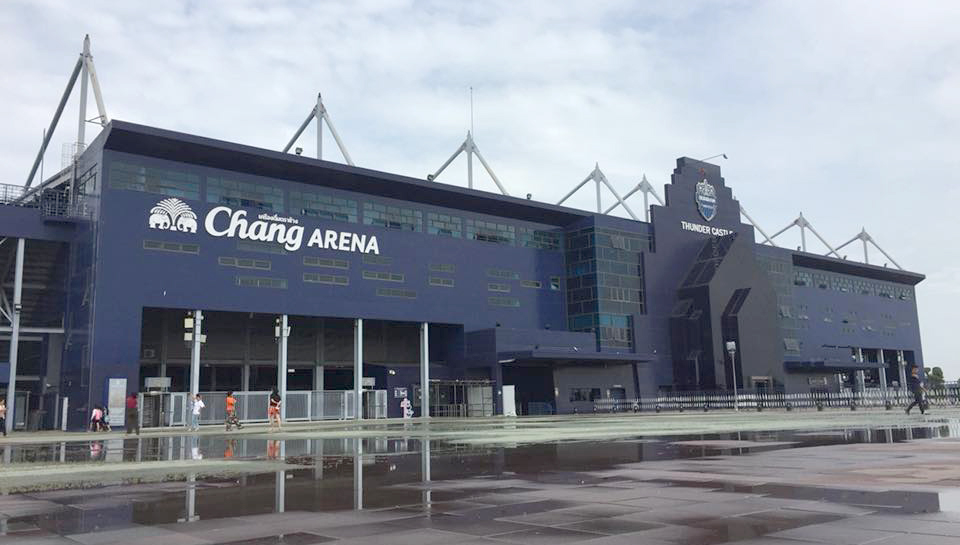
Most people think of Thai football as an afterthought. A minor league, a hobby, something that happens in the background while the real game plays out elsewhere. Then they go to a Buriram United match.
The noise hits you before you reach the turnstiles. Red shirts everywhere — kids, grandparents, monks in orange robes making an unexpected exception for football. Inside Chang Arena, a crowd of thirty thousand is doing what football crowds do when they actually believe. The difference is that this is Buriram, a city of around 35,000 people, in the middle of flat agricultural Isaan, five hours from Bangkok by road. You were not expecting this. Most visitors aren’t.
Buriram United are the most decorated club in Thai football history. Understanding them is part of understanding Buriram.
Who Are Buriram United?
The club was reborn in its current form when local political heavyweight Newin Chidchob took over and relocated the team to Buriram in the early 2010s, renaming them Buriram United and rebuilding them from the ground up. What followed was arguably the most dramatic rise in Asian club football outside of the Gulf states.
Within a few years, Buriram United had won multiple Thai Premier League titles, built a 32,600-capacity stadium from scratch, hosted AFC Champions League group stages, and turned a quiet provincial city into a destination for football tourists from across Southeast Asia.
They play in Thai League 1, the top division. Their record of league titles, cup wins, and continental appearances makes them the closest equivalent Thai football has to a truly dominant force — think of them as the Manchester City of the Mekong, if that comparison doesn’t feel too absurd.
Home colours are blue and white, and their supporters are loud, loyal, and accustomed to winning.
Chang Arena
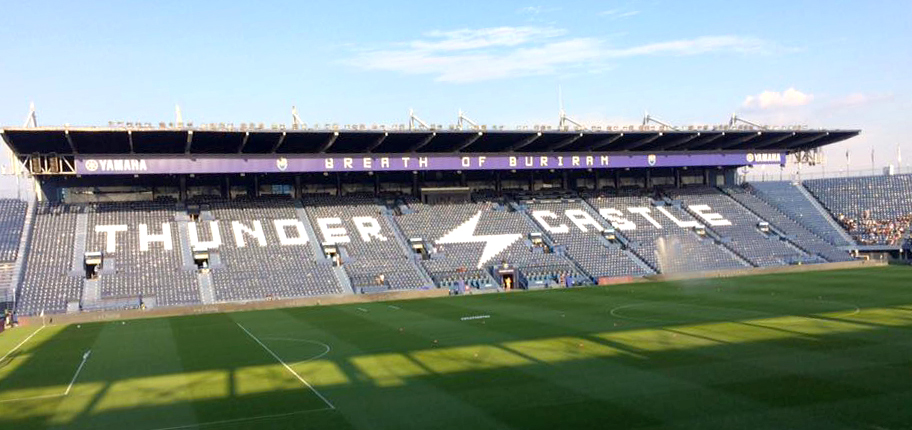
Chang Arena — officially the I-Mobile Stadium, usually called Chang Arena by everyone — is one of the most impressive football stadiums in Southeast Asia at any level. Built specifically for Buriram United and opened in 2011, it was designed to hold 32,600 spectators with most of them under cover, a feature that matters considerably in a climate of this kind.
The pitch is well-maintained and the sightlines are excellent from most seats. Facilities — by Thai provincial standards and, frankly, by many European standards — are genuinely good. Toilets, food concourses, and beer are all available and functional.
The stadium sits on the eastern edge of Buriram city, near the Chang International Circuit where MotoGP is held. The two venues together have transformed this part of the city into something approaching a sporting district. On a Saturday evening with a league match on, the area around the stadium has real atmosphere — street food vendors, merchandise stalls, groups of supporters filtering in from all directions.
Capacity: 32,600
Surface: Natural grass
Location: Eastern Buriram, near Chang Circuit
Getting There
The stadium is approximately 4 kilometres south-west of Buriram city centre.
By air is worth considering if you are travelling specifically for football. Buriram Airport (BFV) is served exclusively by Thai AirAsia, with direct flights from Bangkok’s Don Mueang Airport (DMK) running around 14 times per week. The flight takes approximately one hour — considerably faster than any other method. Search AirAsia flights to Buriram →
By songthaew or taxi is the simplest option from town. Taxis in Buriram are not metered — agree a price before you get in. From the centre, 80–120 baht is a reasonable fare. On match days, songthaews (shared red trucks) often run informal shuttle routes from the town centre.
By motorbike is straightforward if you are comfortable riding in Thailand. The roads around the stadium are wide and the route from the centre is direct.
By hired car gives you the most flexibility, particularly if you are combining the match with a visit to Chang International Circuit or travelling from further afield.
Parking at and around the stadium is plentiful on most match days. For big fixtures — title deciders, cup finals, AFC Champions League matches — arrive early.
Fixtures
The official Buriram United website has an English-language fixtures page which is the most reliable way to check upcoming home matches. The site’s navigation can be unintuitive — go directly to that link rather than trying to find it from the homepage.
Match dates and kick-off times can also change at short notice, so check again a few days before travelling.
Tickets
Tickets are available at the stadium box office on match day and often in advance via online booking through the official Buriram United website. For most Thai League 1 home matches, tickets are not difficult to obtain even on the day.
Price range: 100–500 baht depending on section and opposition (approximately £2.20–£11 at current rates).
The cheapest sections are the uncovered terraces behind the goals, which also tend to have the loudest supporters. Mid-range terrace seats and covered stands offer better comfort. VIP seating exists but is rarely necessary.
For high-profile matches — AFC Champions League fixtures, matches against Bangkok clubs with large travelling support, cup finals — buying in advance is advisable. Check the official Buriram United Facebook page, which is the most reliably updated source of fixture and ticket information.
Practical note for non-Thai speakers: Staff at the box office are generally helpful even with limited shared language. Have your seat preference ready to indicate by pointing at the seating map. Cash is accepted and usually preferred.
The Atmosphere
This is where Buriram United genuinely surprises visitors.
Thai football has a reputation — sometimes deserved — for half-empty stadiums and polite applause. Buriram United matches are different. The club has developed a genuinely passionate support base, partly through the infrastructure Newin Chidchob built around the club (including a television channel, community engagement programmes, and consistent winning), and partly because in a city of this size, the football club is the cultural centre of gravity.
The core ultras group occupies the end behind the goal to your right as you face the pitch from the main stand. They sing continuously, coordinate choreography, and create the kind of noise that makes the first-time visitor look around and re-evaluate their assumptions about Thai football.
The rest of the crowd ranges from families with young children to older supporters who have been following the club since before its current success. The atmosphere is generally excellent-natured. Fighting is essentially unheard of. Alcohol is available but not the focus.
If you arrive expecting a quiet cultural experience, you will be pleasantly corrected.
Food and Drink
Concession stands throughout the stadium sell standard Thai match-day food: grilled chicken on skewers, fried snacks, noodles, soft drinks, and beer (usually Chang or Leo). Prices are reasonable — significantly cheaper than equivalent stadium food in the UK or Europe.
Outside the stadium, particularly around the main entrance and car park areas, street food vendors set up on match days. This is often better food at lower prices. Arriving 45 minutes before kick-off gives you time to eat outside before the gates fill up.
There is no real “pub culture” around the stadium in the way a European visitor might expect. Pre-match drinks happen in restaurants and bars scattered around the broader city rather than in a cluster of pubs near the ground.
For Non-Football Fans
If you are in Buriram primarily for the temples, the countryside, or the motorsport, a Buriram United match is still worth considering as an evening activity — particularly if you have never seen a Thai crowd fully engaged with something they care about.
The experience is accessible, inexpensive, and likely to be one of the more memorable things you do in Thailand that doesn’t appear on any list of official tourist attractions. The match is almost incidental. What you are really attending is a demonstration of how a mid-sized provincial Thai city organises its collective enthusiasm.
Fixtures run from roughly February to November, following the Thai League 1 season calendar. Check the official schedule before planning your visit around a specific match.
Combining with Chang Circuit
Chang International Circuit, home of the Thailand MotoGP round, is approximately 1.5 kilometres from Chang Arena. On non-race weekends the circuit is quiet, but the two venues together illustrate what makes the eastern edge of Buriram unusual: genuine world-class sporting infrastructure, in a city that most of the world has never heard of.
If you are visiting for a MotoGP weekend, a Buriram United home match the previous Saturday is a natural combination and surprisingly easy to arrange.
The Amari Buriram United hotel sits within the complex itself — walkable to both venues. For a full breakdown of accommodation options, see our Where to Stay in Buriram guide.
Before You Travel
Travelling internationally to watch football is one of those trips where things occasionally go wrong — cancelled flights, lost luggage, unexpected medical situations. Worth sorting travel insurance before you leave home.
Considering travel insurance for your trip? World Nomads offers coverage for more than 150 adventure activities as well as emergency medical, lost luggage, trip cancellation and more.
Practical Summary
| Stadium | Chang Arena (I-Mobile Stadium) |
| Capacity | 32,600 |
| Location | South-west Buriram, ~4km from city centre |
| Tickets | 100–500 baht, box office and online |
| Season | February to November |
| Fixtures and news | Buriram United official website |
| Getting there | Taxi from centre: 80–120 baht |
| Parking | Plentiful, free — arrive early for big matches |
Buriram Live covers the real Buriram — temples, football, motorsport, rural life and practical information for visitors and those with deeper connections to the region. No fluff, no sponsored itineraries.