
You’ll smell the pla ra before you see it.
Wander through a Buriram market in the morning and there’s a moment — somewhere between the grilled chicken and the papaya — where the air changes. Something earthy and fermented cuts through everything else. Not unpleasant exactly, but insistent. Alive, somehow.
That’s pla ra. And if you’ve ever eaten Isaan food and wondered why it tastes completely different from anything you’ve had elsewhere, this is usually the answer.
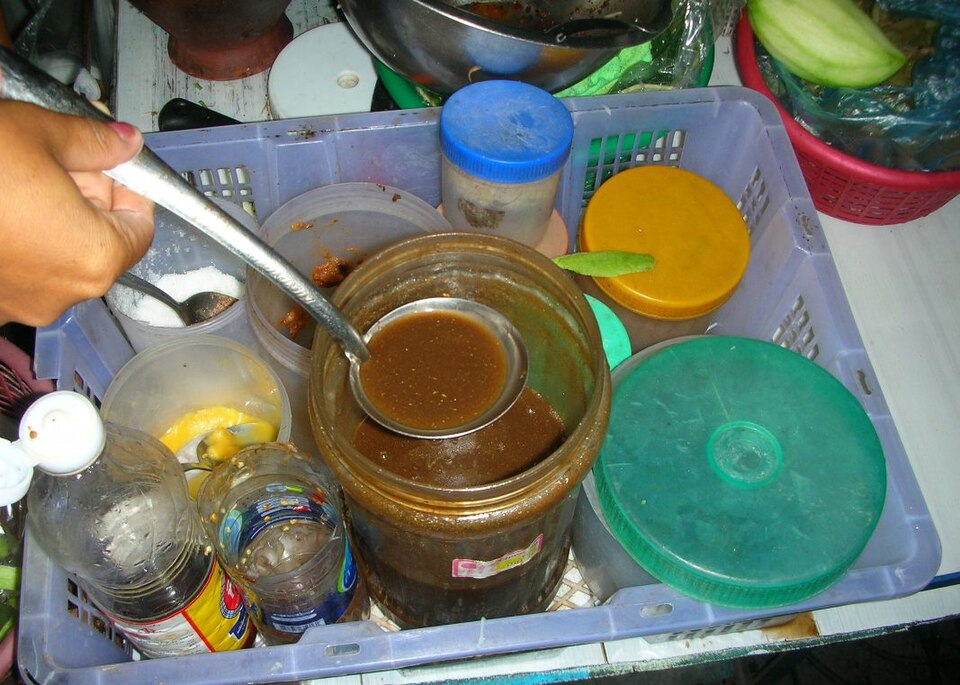

What Is Pla Ra?
Pla ra (ปลาร้า) is fermented freshwater fish — snakehead, tilapia, catfish — packed with salt and roasted rice bran, sealed in a container, and left alone for at least six months. Three ingredients, one jar, half a year.
The result is a thick, murky, intensely pungent paste that sits somewhere between fish sauce and anchovy paste in character, but considerably more assertive than either. The science is the same as yogurt, kimchi, or sourdough — lactic acid bacteria do the work — but the flavour it produces is all its own: salty, sour, and loaded with umami.
That last part matters. Glutamic acid — the compound responsible for umami — is the most abundant amino acid in pla ra. It’s the same chemical reason parmesan, soy sauce, and Worcestershire sauce all taste so deep and savoury. Pla ra just gets there in a more dramatic fashion.
Older Than Thailand Itself
Pla ra isn’t strictly a Thai invention. It’s found across the wider Tai ethnic group — in Laos, where the same product is called pa daek, and in parts of southern China — predating the borders of any modern nation. The dish belongs to a culture that existed long before anyone drew the map.
The earliest written record in what is now Thailand dates to the 17th century, when a French diplomat noted the practice of fermenting fish in earthenware jars. In 2012, pla ra was formally added to Thailand’s Register of Intangible Cultural Heritage — an official acknowledgement of something Isaan people had known for centuries.
The Northeast built its cuisine out of necessity. Dry seasons, poor soil, a landscape that rewarded resourcefulness. Preservation became identity: smoking, drying, fermenting weren’t techniques so much as ways of surviving, and then — over hundreds of years — ways of living. Pla ra is what happens when a culture is both ingenious and very, very patient.
The Dishes That Depend On It
Here’s the thing most visitors don’t know: the som tam you ate in Bangkok probably wasn’t the real version.
Som tam Thai — the version most restaurants outside the Northeast serve — is sweeter, milder, and made with fish sauce. Som tam Isaan, the original, uses pla ra. The difference is considerable. Where the Bangkok version is bright and sharp, the Isaan version has a depth that lingers — earthier, more complex, more itself. It’s the same dish in roughly the way that a cover version is the same song.
Pla ra appears throughout Isaan cooking: in laab (spiced minced meat salad), in nam tok (grilled meat with herbs and toasted rice), in curries, in bamboo shoot dishes, in nam prik pla ra — a chilli dipping sauce made from pla ra, lime, and fresh chillies that’s one of the most common condiments in a Buriram kitchen. In many Isaan households, it’s a background presence in nearly everything.
Often it’s diluted with water or fish sauce before cooking, which softens the intensity while keeping the flavour intact. Many visitors who would decline a jar if offered one directly have eaten it dozens of times in this form without ever knowing it was there.
Should You Try It?
Honestly: only if you want to.
There’s no hierarchy here. Isaan people haven’t been waiting several centuries for visitors to validate pla ra by eating it straight out of the jar. It needs no endorsement. But if you’re curious, the best entry point isn’t the jar itself — it’s through the food that uses it: a properly made som tam Isaan from a market vendor, a bowl of laab, a plate of grilled chicken with nam prik dipping sauce on the side.
It’s worth knowing that cooking transforms pla ra considerably. The smell that might stop you in your tracks at a market stall mellows dramatically in the finished dish, folding into the background while it does its flavour work. Raw pla ra — tasted directly — is a different and rather more confronting experience. Neither is better. They’re just different faces of the same thing.
If you try it and love it, you’ve found something most visitors miss entirely. If you try it and don’t, you’re in excellent company.
Finding Pla Ra in Buriram
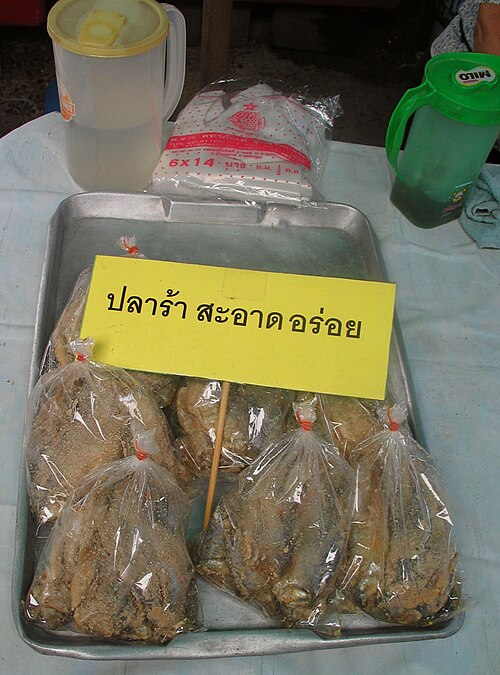

You won’t have to look hard. Covered markets across Buriram sell it in jars alongside other fermented and dried ingredients. Any som tam vendor’s cart in the province will have a jar on the counter — dark brown, slightly opaque, unmistakable. That jar on the cart is your clearest signal that you’re eating Isaan food as it’s actually supposed to taste.
If you’re buying to take home, jars of commercially produced pla ra are available at larger supermarkets and market stalls. Sealed, they travel reasonably well. Open them somewhere with good ventilation.
Pla ra is just one piece of a food culture that runs deeper than most visitors expect. For a wider look at what’s on the table in Buriram, see our Isaan food guide.
Travelling to Buriram? Make sure you’re covered before you go. Get a quote from World Nomads — they cover adventure activities and medical expenses across Southeast Asia.

Staying longer? SafetyWing Nomad Insurance offers flexible monthly coverage designed for longer trips and slow travel.
Feature image: Xufanc, CC BY-SA 3.0 via Wikimedia Commons.
Market image: Heinrich Damm, CC BY 2.0 via Wikimedia Commons.
Buriram Live covers the real Buriram — temples, football, motorsport, rural life and practical information for visitors and those with deeper connections to the region. No fluff, no sponsored itineraries. Follow Buriram Live on Facebook for new articles and updates.
This article contains affiliate links. If you make a purchase through a link on this page, we may earn a small commission at no extra cost to you.
Get Buriram updates by email
Occasional emails when there is something worth knowing: new guides, festival and MotoGP dates, and Buriram United news. No spam, and you can unsubscribe at any time.
We will email you a link to confirm. See our privacy policy.