
“You’ll get bored in six months.” It is the most common thing said to anyone who announces a move to rural Thailand. And it is not entirely without basis — there is no purpose-built tourist entertainment district, no cinema within walking distance of most villages, and the road to the nearest shopping mall begins to feel familiar rather quickly. The worry, at its core, is that there are simply not enough things to do in Buriram to fill a life.
But Buriram is not the rural Thailand of the cliché. It has a world-class motorsport circuit, a 50-metre swimming pool that costs 30 baht to use, a WPBSA-registered snooker club open until 5am, an Olympic Gold Label marathon, a Muay Thai gym that has trained genuine legends, and a birdwatching site that draws ornithologists from across Asia. For those prepared to look beyond the obvious, the question is not whether there is anything to do in Buriram — it is whether there is enough time to do it all.
This guide is not aimed at tourists passing through. It is for people who are living here, planning to live here, or wondering whether a life in Buriram is genuinely liveable beyond the football and the temples. The honest answer is yes — but it requires initiative. Nobody is going to knock on the door with a schedule. What follows is the information to go looking with.
Getting Physical
Muay Thai
The place to start is Lookchaomaesaitong Gym — known as Sit Namkabuan — near Buriram’s railway station. This is not a tourist Muay Thai experience with padded walls and a gift shop. It is a real training camp, run by the family of Coban Lookchaomaesaitong, one of the most celebrated fighters in Muay Thai history, and it has been training fighters since 1960. Foreign visitors are genuinely welcome, and the pricing — 500 baht per day or 12,000 baht per month — puts serious training within reach of anyone staying longer than a few weeks. If learning Muay Thai in a genuine camp environment is on the list, this is as good as it gets in northeast Thailand.
Gyms
For general fitness, Fit Fit Fit operates a two-floor gym near the old city moat with a walk-in rate of around 199 baht per day. It is well-equipped and centrally located.
Worth knowing about, and considerably cheaper, is the gym at Buriram Rajabhat University (BRU) — a fully equipped public facility open from 4pm at just 30 baht per visit. The university also has an eight-lane 400-metre athletics track used publicly on mornings and evenings, making it the most practical option for anyone who wants a proper running surface without hotel rates.
Hotel fitness facilities at the Amari Buriram United, Ray Hotel and Modena by Fraser are available to day guests at varying rates. The Ray Hotel also offers yoga classes — believed to be the only dedicated yoga venue in the city at the time of writing.
Swimming and Water Parks
The municipal Buri Ram Swimming Pool is one of the city’s best-kept secrets. A 50-metre racing pool built in 1991 and maintained to a good standard, it is open daily from 9am to 8pm and costs 30 baht for adults and 20 baht for children. Directly adjacent are the city-centre tennis and badminton courts, also open to the public, making this corner of Buriram a natural base for a daily exercise routine without paying resort prices.
For families — or anyone who simply wants a more exuberant afternoon in the water — Buriram has more water parks than its size might suggest. Play Park Buriram (สวนน้ำเพลย์พาร์ค บุรีรัมย์) in Ban Yang, Mueang district, runs daily from 10am to 6pm and has slides, swimming pools on a salt system, and food on-site.
Nayramit Water Park (สวนน้ำเนรมิตบุรีรัมย์), also in Mueang district, claims to be the largest in the province — open weekends and public holidays only. The Infinity SeeSun Resort in Krasang district also has a water park — largely shallow pools well suited to younger children, and part of a wider resort with a restaurant and outdoor pool that makes it a full-day destination for families in the east of the province. Several other water parks exist across the province, including in Nang Rong district and Khu Mueang; the most current details are always on each venue’s Facebook page, as seasonal operating schedules vary. Prices are low by any standard — typically well under 100 baht entry.
Running and Cycling
On Foot
The go-to route for Buriram’s runners is Khlong Lalom, the 1,800-year-old moat that once protected the ancient settlement at the city’s heart. The full circuit is 5.36 kilometres, crossing several roads at points where the moat has been divided over the centuries. It is not a dedicated track but it is a pleasant route through the city that locals use throughout the day.
For anything more structured, the eight-lane 400-metre track at Buriram Rajabhat University is the answer — accessible to the public, used by local runners, students and serious athletes in the mornings and evenings.
Those looking for a goal to work toward should note that the Buriram Marathon each January is a World Athletics Gold Label event — the world’s first and only Gold Label night marathon, run across a flat circuit that takes in Khao Kradong. With nearly 36,000 finishers in 2026 and total prize money exceeding ten million baht, it is a genuine race, not a fun run. Training for it gives the year’s running a shape and a purpose.
Cycling
Buriram’s flat terrain and light traffic outside harvest season make it genuinely well-suited to cycling. The roads between district towns pass through rice paddies, cassava fields and Khmer ruins, and distances between villages are short enough to make a half-day ride substantial without it becoming a grind. Khao Kradong Forest Park has trails for off-road riding, and the roads south toward Prakhon Chai and Lam Plai Mat are quiet and well-surfaced.
There are no formal cycling clubs with regular public rides confirmed in the city, but the Buriram Cycling Championship has an active Facebook page and organises events in the province. Strava is the most practical way to locate other local cyclists — many use it, and route suggestions are easy to find. The community exists; it simply requires seeking out rather than waiting for it to arrive.
Golf
Khao Kradong Golf Club, set at the foot of the extinct volcano it is named for, is the only 18-hole course in the province — with a driving range, practice facilities, caddie hire, restaurant and clubhouse. It is worth being honest: online reviews are mixed, and it does not offer the manicured conditions of the better courses elsewhere in Thailand. But it is what exists in Buriram, and for residents who want to play regularly without driving to Korat or further, it is the answer. Green fees are affordable by any international comparison.
More significantly for those looking to meet people, the Buriram Golf Society organises regular events at Khao Kradong, including Texas Scrambles and Ryder Cup-format matches. Turning up to a Society day is one of the more straightforward routes into the wider foreign-resident social network.
For practice sessions, a dedicated driving range operates on Road 226.

Life at the Circuit
Chang International Circuit is most visible to the outside world one weekend per year, when MotoGP Thailand arrives and the province changes character entirely. But the circuit is open to the public year-round, with free entry and grandstand access on non-race days. Watching national championship rounds from the stands is something locals do casually, in a way that would be unthinkable at a comparable European venue.
On the Circuit
For those who want to be on the circuit rather than watching it, the options are genuinely remarkable for a provincial town:
BRIC Superbike Track Day runs annually — most recently in September 2025 — and allows riders to bring their own superbikes onto the full MotoGP circuit. Registration is online only and sells out; the Chang Circuit Official Facebook page announces dates well in advance.
The Ducati DRE Racetrack Academy offers structured riding courses at BRIC throughout the year, from beginner Track Intro sessions through to the advanced Track Master programme. Instructors include former MotoGP Ducati rider Karel Abraham. Course packages include two nights’ accommodation at the Modena by Fraser or Crystal Hotel Buriram. The fact that instruction at this level is available in Buriram at all is one of those things that surprises anyone who has written the region off as provincial.
Drag racing events also run at the circuit — the “Buriram 1000 Metres” format covers 201m, 402m and 1000m classes for both cars and motorcycles, drawing competitors and spectators in substantial numbers.
Buriram Silachai Go-Kart sits one kilometre from Chang Arena — the province’s only go-kart circuit, at 580 metres, with a price of 200 baht for four minutes. It is not the MotoGP track, but the proximity makes the two a natural pairing for a day out.


On the Range
The Buriram United Shooting Range at the I-Mobile stadium complex on Highway 219 — between Khao Kradong and Prakhon Chai — is one of the less-publicised things to do in the city and unusual for a town of this size. Opened in 2014 with over 50 covered stations, the range offers rental of .22, .38, .45 and 9mm pistols alongside double-barrelled shotguns. Safety instruction is required before use; goggles and ear protection are provided.
Snooker and Pool
Crucible Snooker Club Buriram is WPBSA-approved and, by any standard, a serious venue: five Riley steel-block cushion tables with Strachan 6811 cloth and Aramith SuperPro balls, video cameras on every table, and a separate smoking room. Open 11am to 5am daily — a schedule that reflects Thailand’s different relationship with late evenings. The club hosts rounds of the U Snooker 6 Red Thailand Ranking Circuit (the “Buriram Cup”), which gives some indication of the standard played here.
Signature Snooker Club offers a second option for those who want variety. For a more social game with a cold beer alongside it, both Paddy’s Bar and La Lom Bar have pool tables and the right atmosphere for an easy afternoon or evening.
Fishing
Fishing is not a hobby in rural Thailand so much as a way of life, and Buriram has serious options for those who want to pursue it properly.
Buriram Monster Fishing Park in Lam Plai Mat district is the standout venue. The park stocks Siamese giant carp, alligator gar, arapaima, Mekong giant catfish, redtail catfish and pacu — species that serious anglers travel to Thailand specifically to target. Facilities are good: shaded seating, cold drinks always available, attentive and knowledgeable staff. The rate is approximately 1,500 baht per rod per day; booking ahead is recommended; hours run 8am to 6pm. An English-language website is available.
Away from the park, reservoir fishing is available throughout the province. Lam Nang Rong Dam to the south is the largest body of water, with boat hire available and the kind of undisturbed early-morning atmosphere that makes it clear why fishing holds such cultural importance here. The Infinity SeeSun Resort in Krasang district offers fishing on its private lake — a more accessible option for those based in the east of the province, and good value as a way to combine a fishing session with a meal or an afternoon by the water. Every district town in the province sits beside some body of water, and most of them have local fishermen who will not look twice at a foreigner arriving with a rod.
Wildlife and Nature

Buriram’s wildlife credentials are more substantial than its size would suggest.
Huai Chorakhe Mak
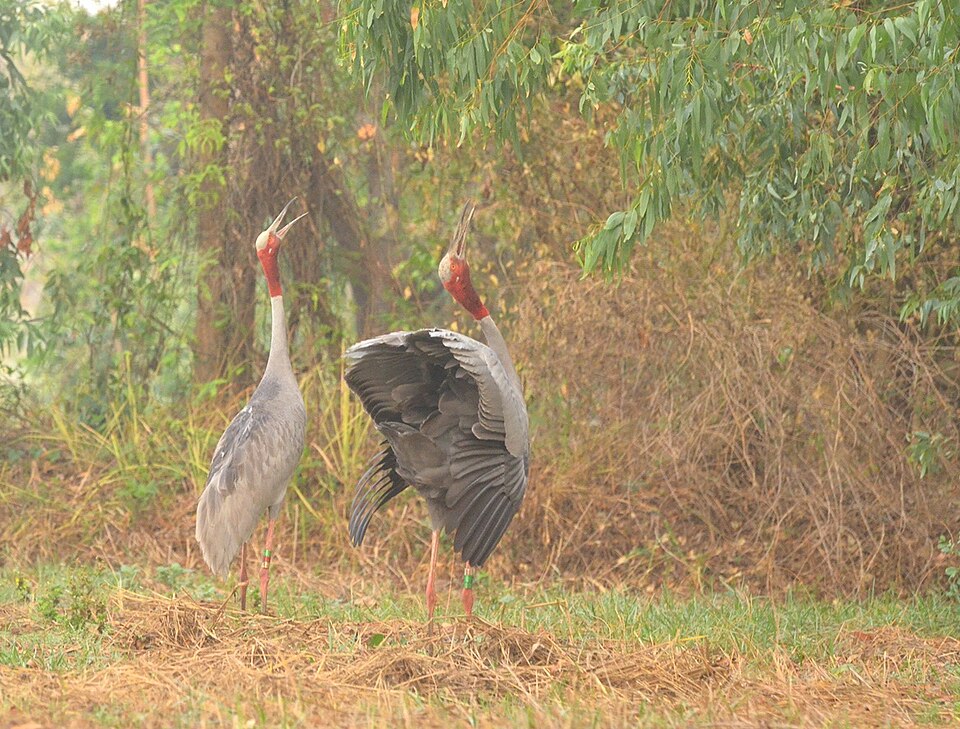
Huai Chorakhe Mak, about 20 minutes south of the city, is one of the most important Sarus Crane habitats in Southeast Asia. Up to 168 cranes winter here across 1,500 rai of organic paddy and wetland, and the community-run Conservation Centre is free to enter. A four-storey observation tower, binoculars provided on-site and the option of hiring a boat (300 baht) make this a proper wildlife destination rather than a token attraction. Best light is 6–9am and 3–6pm. The full guide to the Sarus Crane site covers planning a visit in detail.
Huai Talat Reservoir
Huai Talat Reservoir and Bird Park on the Buriram–Prakhon Chai road records over 200 species and serves as a second Sarus Crane reintroduction wetland. An adjacent private aviary — locally known as Suan Nok — allows closer viewing of many species. Food vendors operate in the evenings, making it a pleasant end to an afternoon out. The reservoir is reached by taking the Buriram–Prakhon Chai road for approximately 12 kilometres and turning left for 2 kilometres.
For the wildlife of Isaan more broadly, Khao Kradong Forest Park has woodland trails that reward slower, more attentive walking — raptors are recorded here, alongside the more common species of the Thai dry forest.
The iNaturalist app connects visitors to the global community of wildlife recorders and allows contributions to local species databases. It is a surprisingly absorbing way to turn walks and drives into something with a cumulative purpose — and it connects you with others recording in the same area.
On the Water
Nong Tah Haeng
Nong Tah Haeng is one of Buriram’s most distinctive leisure destinations: a 247-rai reservoir on the Buriram–Surin border, 48 kilometres east of the city and accessible from Krasang district. Until 2022 it was virtually unknown outside the villages bordering it. Now on weekends and school holidays it draws families from across both provinces — and almost nobody writing in English has covered it properly.
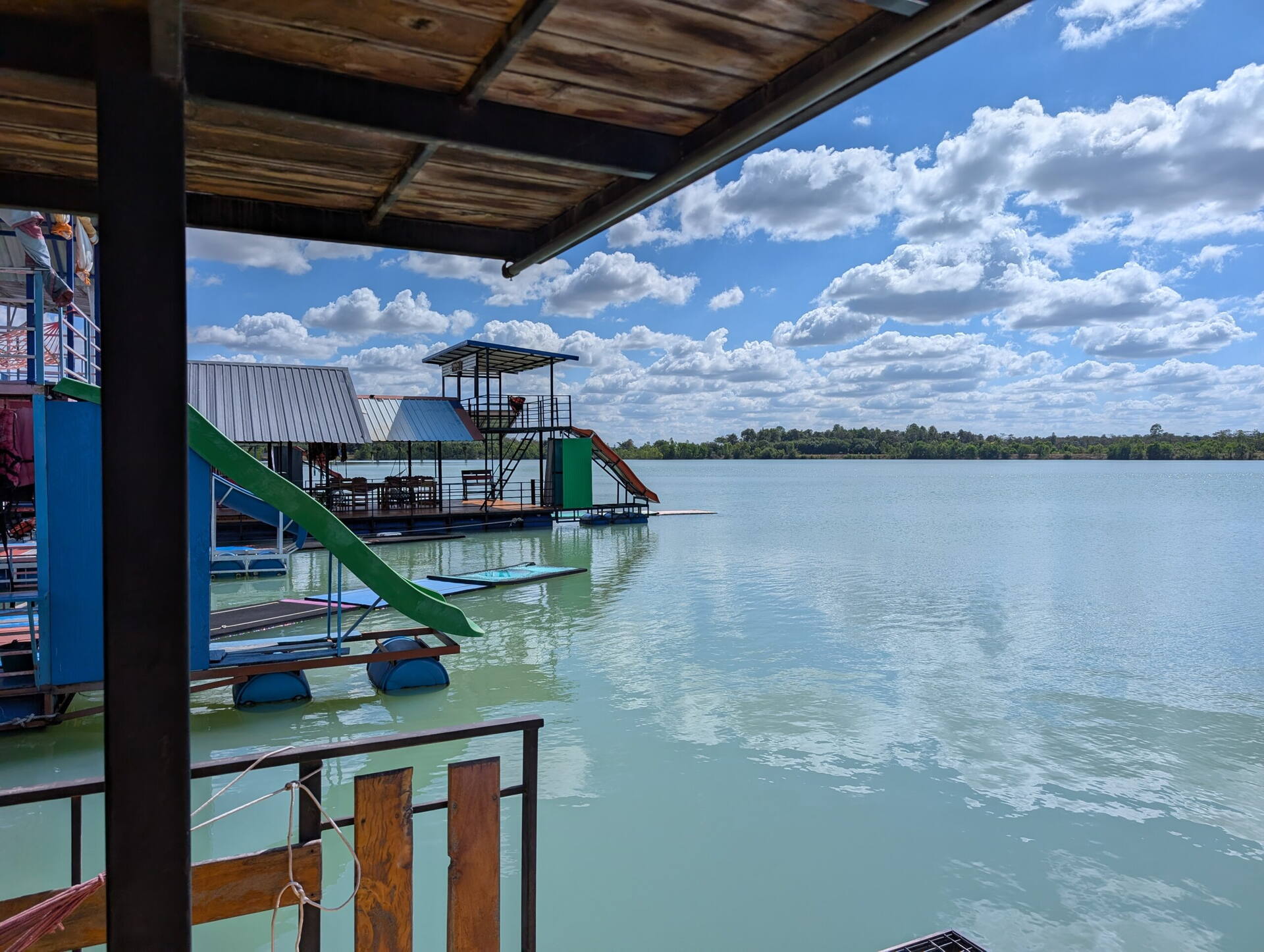
Around 30 floating raft platforms are moored along the water, each owned and operated by a different local family. Some are simple platforms with tables and hammocks overlooking the lake. Others are multi-level, with water slides and built-in shallow pools for small children. Every raft operates as a small food and drink business — Thai home cooking at the kind of prices that make a full afternoon with a family a very modest cost. Life jackets are provided in all sizes. Pedalos and rubber rings are available on the water. It is the kind of place that visitors tend to return to — a genuine local gem that almost no English-language travel writing has ever noticed, and all the better for it. The Facebook page (ชายหาดหนองตาเฮง ตำบลเพี้ยราม) is worth checking before visiting outside school holiday periods, as activity varies by season. Read the full guide to Nong Tah Haeng.
Lam Nang Rong Dam
Lam Nang Rong Dam in Nang Rong district creates one of the province’s largest reservoirs — a proper beach area, restaurants built out over the water, inner tube hire, boat hire and an overnight camping and accommodation option for those who want to stay longer. It is a different scale and atmosphere from Nong Tah Haeng: more established, more facilities, and well-suited to a group who want options beyond the water alone.
Motorcycle Touring
The roads of Isaan were, whatever they were designed for, made for motorcycle touring. The plateau is flat, distances between Khmer temples and ruins are manageable, and traffic outside the main towns is consistently light. A day from Buriram city can take in multiple ancient sites, reservoir views, market towns and back roads that see no tourist traffic at all.
The Isaan Riders Facebook group organises group rides around the region and is open to foreign riders. The Foreign Motorcycle Riders Thailand (FMRT) group is a wider national community for expatriate riders. For those who want to move from touring to track skills, the Ducati DRE courses at Chang International Circuit offer instruction at a level that most European track schools would charge several times more to deliver.
Motorbikes and cars are available from J&D Car and Motorbike Rentals, which offers delivery within the city. For longer journeys across the province, compare car hire rates from Buriram Airport — Avis and local operators are both available.
The Social Scene
The three bars that form the core of Buriram’s expat social life are well-established and serve distinct purposes.
Bamboo Bar has been operating for over 14 years and is the longest-running Western-friendly venue in the city, with live music most evenings and draught beer. Paddy’s Bar is an Irish pub with Guinness and Kilkenny on draught, six sports TVs, a pool table and darts, and consistent coverage of UK and international sport. La Lom Bar sits by La Lom lake in a wooden cottage setting — quieter and more relaxed, with a pool table and the same sports coverage, described by regulars as the better option for a slower evening.
For something with more atmosphere, Tawandang Mahason Buriram on Romburi Road is a live-music dinner venue in the Thai tradition — a proper band, Thai and Isaan food, open from 9pm through to 3am daily. The surrounding area on Romburi Road has a cluster of further bars and clubs that come alive later in the evening — including Speed 1 and Full House — and this is the closest Buriram gets to a night-out district, more substantial than visitors often expect.
Cinema: both Major Cineplex at Big C and SF Cinema at Robinson Lifestyle Center show English-language films (usually with Thai subtitles rather than dubbed). A film evening is a realistic regular option rather than a special occasion.
Beyond the City — Making a Life in Rural Buriram
This is where the honest conversation has to happen.
Living more than 30 or 40 minutes from the city reduces access to organised facilities significantly. There is no second 50-metre pool in the province, no second go-kart circuit, no second WPBSA snooker club. The “bored in six months” concern carries most weight for people whose daily routine depends on the kind of structured sport and fitness infrastructure common in Western towns — because that infrastructure simply is not present in the district towns and villages of rural Buriram.
But the question should not be whether rural Buriram matches what is available in the city. The question is whether a full and enjoyable life is possible with what is actually there. For the right person, with a willingness to engage with the place on its own terms, the answer is yes.
Nang Rong
The largest district town south of the city, Nang Rong has more independent infrastructure than most. Spartan Gym on Chokjai-Detchudom Road is a fully equipped fitness centre with over 30 pieces of international-standard equipment — walk-in at just 40 baht per day, or 600 baht per month. The Phanomrungpuri Hotel and Socool Grand Hotel both have swimming pools; it is worth asking directly about day rates for non-guests, as both are genuinely well-maintained.
The bigger draw for active residents is Lam Nang Rong Dam — a large reservoir with a proper beach, restaurants on the water, inner tube hire, boat hire and an overnight camping and accommodation option. For people who want to combine swimming with eating and socialising in an easy, open setting, this is the nearest the southern province has to a leisure destination. The town has the Thetsaban Nang Rong Health Park for walking and gentle running, and the Nang Rong Walking Street — the evening market along the main road — for social activity.
Nang Rong also has its own water park — active on Facebook and useful for families who want something closer than the city. Living near Nang Rong also puts Phanom Rung and Mueang Tam within half an hour. Neither loses its appeal with repeated visits — both are the kind of places that change with the light and the season.
Krasang and the East
The Krasang area is one of the more interesting parts of the province for anyone who takes the time to explore it.
Nong Tah Haeng is effectively on the doorstep — the lake is connected to Krasang district by a bridge, and what is a 48-kilometre drive from the city is a short and easy trip from the town. This makes it a practical regular destination rather than an occasional outing for those based in the east. Covered in the water section above; the full guide has the detail.
Infinity SeeSun Resort
Infinity SeeSun Resort, in Songchan sub-district of Krasang, is more than a hotel — it functions as a leisure destination for the whole area. A fishing lake, outdoor pool, water park, restaurant and pool table make it a realistic full day out, and one of the more complete facilities in this part of the province. The water park is currently being refurbished — check the SeeSun Facebook page for updates on what will be on offer when it reopens. Check availability at Infinity SeeSun Resort if combining a stay with a day of activities appeals.
The night market on Friday, Saturday and Sunday near Krasang’s reservoir is the kind of regular social fixture that becomes genuinely important to quality of life in a rural area. Food, occasional shopping, familiar faces over time — it is where the local community gathers, and being a regular face there is one of the better investments available to a newcomer.
For food with a genuine local story, Pa Noi Mi Yum — located, improbably, inside Krasang’s local school — has been serving the district’s signature noodle dish for three generations. Mi Yum mixes handmade noodles with spiced minced meat in a way that has no real equivalent elsewhere in the province. Open 8am to 4:30pm daily.
Neem Trees
Most significantly for evening entertainment, Neem Trees on Highway 226 near Krasang has established itself as a genuine cultural destination for the whole of south Isaan. The venue books major Isaan and Thai country acts — including performers at a national level, with shows that sell out in advance and draw audiences from across the region. For anyone living in the east of the province wondering whether real live entertainment is accessible without travelling to Korat, Neem Trees is the answer.
Prakhon Chai and the South
Huai Talat Reservoir and Bird Park is the reason to head south toward Prakhon Chai — covered in the wildlife section above, but worth restating as a practical regular destination for those living nearby: 200+ bird species, a private aviary, evening food vendors, and a pleasant reservoir setting that rewards return visits as the birds change with the season.
The centre of Prakhon Chai has Ra Sai San Lake Park, a green space with lakeside restaurants that functions as the town’s social common ground and a natural place to spend an evening. A few kilometres further, Mueang Tam rewards the kind of slow, repeated exploration that a resident can afford in a way a tourist cannot.
Ban Kruat — For the Historically Curious
In the far south of the province, approaching the Cambodian border, Ban Kruat contains what was — a thousand years ago — the largest Khmer ceramic production centre in Southeast Asia. More than 300 kilns have been identified in the area. Two have been restored by the Fine Arts Department: Nai Jian Kiln and Ban Sawai Kiln, located 10 and 5 kilometres from Ban Kruat respectively. The Ban Kruat Museum at the local school exhibits the best of what has been excavated — Khmer stoneware that was exported across the region during the Angkor period.
For anyone with an interest in Khmer history in Buriram that extends beyond the temple circuit, this is a destination that almost every guide overlooks. It is 66 kilometres south of Buriram city — a half-day out from anywhere in the south of the province.
Satuek and the Mun River
On the western edge of the province, Satuek district sits on the Mun River — the main waterway of the Khorat Plateau. The large Buddha image on the riverbank is the local landmark, and during the dry season (November to April) over 100 bird species are recorded in the immediate area, making it a worthwhile addition to any birdwatching circuit in the west of the province.
The Universal Rural Toolkit
Across all of rural Buriram, several things are available that do not appear on any official attractions list:
Badminton at the wat. Almost every temple in Thailand has a badminton court — usually concrete, often floodlit in the evenings, with shuttlecocks and rackets available for a few baht or simply borrowed from whoever is already playing. This is how rural Thailand stays active. Arriving and joining is not merely acceptable; it is welcomed. It is also one of the more reliable routes into actual conversation with local people, which in itself is one of the more valuable things available in a place like this.
Fishing. Every reservoir, every irrigation canal, every stream. Rods are cheap and widely available. No licence is required. What begins as an activity often becomes one of the more unexpected social portals — serious fishermen anywhere in the world will talk to another fisherman in a way they will not talk to anyone else.
Cycling the early morning roads. The roads of rural Buriram between 6am and 9am are as close to peaceful countryside cycling as anything in Southeast Asia — light traffic, flat terrain, remarkable scenery when the rice is growing. This is the hour when the landscape shows what it is.
Night markets. Every district town has a market on at least two or three evenings per week. These are not tourist attractions. They are where people eat, shop, meet neighbours and gather — and being a regular face at the local market is, for many long-term foreign residents in rural Thailand, one of the most meaningful investments they have made in their quality of life.
Making It Yours
Very little of it comes looking for you. The municipal pool requires knowing it exists. Joining the Golf Society requires someone mentioning it. The BRIC track day requires checking a Facebook page in September. Neem Trees requires driving to Krasang. The wat badminton court requires being curious enough to stop when the lights are on at 7pm.
This is not a criticism of Buriram. It is simply how life works in a place not organised around the tourist experience. The infrastructure for a genuinely active and social life is there. The habits and curiosity to use it have to come from the person living it.
The Local Community
It is also worth saying clearly: the most rewarding social lives in rural Buriram are generally built through the local community, not by seeking out other foreigners. Temple events, neighbourhood markets, village sport — these are where genuine friendships are made and where access to local knowledge opens up in ways that no expat Facebook group can replicate. Learning even basic Thai is the single highest-return investment available to anyone moving here. It does not need to be fluent; it needs to be genuine, and the response it produces from local people is immediate and lasting.
Practical online starting points: the Isaan Riders group for motorcycle enthusiasts, the Buriram Cycling Championship Facebook page, and the Buriram Marathon Facebook page and group are all active and welcoming of newcomers. The Marathon community in particular connects people from across the province and internationally, and training for the January race gives the preceding months a clear and motivating structure.
Buriram is not boring. It is patient — and it gives back considerably more than you might expect, to anyone prepared to go and find it.
Planning a longer stay in Buriram? Get a Nomad Insurance quote from SafetyWing — flexible monthly cover popular with long-stay visitors across Southeast Asia. For adventure activities and water sports, get a travel insurance quote from World Nomads — covers swimming, Muay Thai and water activities.
For getting around the province, compare car hire rates from Buriram Airport — essential if you want to reach the Monster Fishing Park, Nong Tah Haeng, the Ban Kruat kilns and the district towns at your own pace.
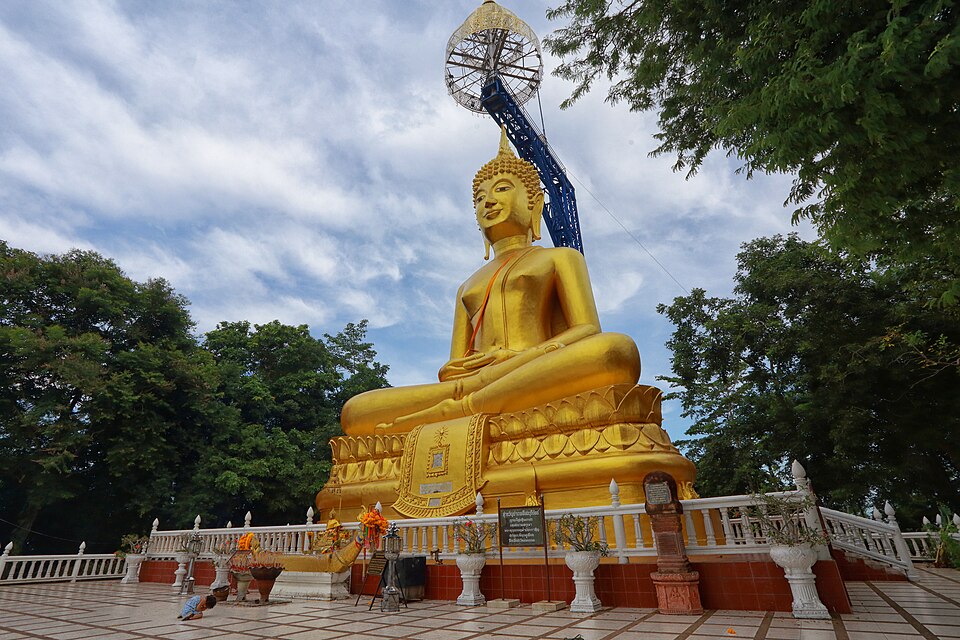
Khao Kradong photo: Yakuzakorat, CC BY-SA 3.0 via Wikimedia Commons.
Chang Circuit photo: Box Repsol / Jaime Olivares, CC BY 2.0 via Wikimedia Commons.
Sarus Cranes photo: KongkhamWichit, CC BY-SA 4.0 via Wikimedia Commons.
Buriram Live covers the real Buriram — temples, football, motorsport, rural life and practical information for visitors and those with deeper connections to the region. No fluff, no sponsored itineraries. Follow Buriram Live on Facebook for new articles and updates.
This article contains affiliate links. If you make a purchase through a link on this page, we may earn a small commission at no extra cost to you.
Get Buriram updates by email
Occasional emails when there is something worth knowing: new guides, festival and MotoGP dates, and Buriram United news. No spam, and you can unsubscribe at any time.
We will email you a link to confirm. See our privacy policy.