
Most visitors give Buriram a single day: Phanom Rung in the morning, back to the hotel by lunch. That misses most of what makes the province worth the trip. 3 days in Buriram is enough to see the two great Khmer temples properly, watch wild sarus cranes come in at dusk and climb an extinct volcano, with time left over for a long lazy lunch on a lake, and at a pace that respects the afternoon heat.
This itinerary gives you three full days on the ground, fitted around the flights from Bangkok. It assumes three nights in Buriram city or at the stadium complex, and a car or a driver. Every stop links to our full guide if you want the detail.
The plan at a glance
- Arrival evening: land mid-afternoon, check in, Isaan food at the night market.
- Day 1: Khao Kradong volcano in the cool of the morning, an afternoon rest, sarus cranes at dusk.
- Day 2: Phanom Rung at 6am opening, then Prasat Mueang Tam, back for lunch and a free afternoon.
- Day 3: Chang Arena and the circuit, then a long lunch on a floating raft at Nong Tah Haeng.
- Going home: the 8:30am flight the next morning, or the afternoon one if you want a last morning.
- Entry fees for all three days: 250 baht per foreign adult, for the two temples. The other stops have no entry fee; at Nong Tah Haeng you pay for a raft by the hour, plus food.
Plan Around the Flights
Buriram has two flights a day each way, both Thai AirAsia from Bangkok Don Mueang, so plan around them. On the winter schedule (from late October 2026; we checked as far as February), flights arrive at about 8:00am and 4:00pm and depart at 8:30am and about 4:30pm. In summer the afternoon flights run about an hour earlier, and afternoon times shift by a few minutes from day to day, so check when you book. The flight takes about an hour, and the airport is around 32 km from the city, a 30 to 40 minute drive. Our flight tracker shows the day’s flights live, and you can check AirAsia flights to Buriram.
For three full days, take the afternoon arrival the day before you start and fly home on the 8:30am departure the morning after day three, or the afternoon one if you would like a last morning. That is three nights. If you can only spare two nights, land at 8am on day one and drop day three’s lake: the afternoon flight home leaves at about 4:30pm (3:40pm in summer), and Nong Tah Haeng is in the opposite direction from the airport.
Getting Around
Buriram’s best sights are spread across the province and almost none of them has public transport, so decide early how you will get around.
Hire a car at the airport. This gives you the most freedom and makes the early start on day two easy. Most mainstream hire platforms do not list Buriram Airport at all, which catches people out. Compare car hire rates from Buriram Airport before you travel.
Book a car or van with a driver. Our directory lists local operators we have checked, including Nang Rong Taxi Centre, a 24-hour service at Nang Rong bus terminal, and Khun Manop Van Hire, an owner-driver. See all our Getting Around listings.
Join a day tour for the temples. Guesthouses and hotels arrange Phanom Rung and Mueang Tam day tours for roughly 1,200–1,800 baht per person. Without a car, the airport has a shared shuttle van to Buriram bus terminal for 100 baht a person and a taxi counter in the terminal, and city taxis are not metered, so agree the fare first. More in our guide to getting to and around Buriram.
Arrival Evening: Isaan Food
Land in the afternoon, check in, and head out to eat the way the province does: som tam made Isaan-style with pla ra, gai yang with jaew dipping sauce, larb and sticky rice. At the night market you can eat well for under 100 baht. The Walking Street market runs at weekends; check local social media for the current days and hours. Our guide to Isaan food in Buriram explains what to order.
Day 1: Volcano, Then Cranes at Dusk
Early morning: Khao Kradong. Roughly 6 km south of the city centre, about 10 minutes away, Khao Kradong is an extinct volcano topped by a Buddha more than 20 metres tall. It is free. Climb the 297 steps (ten to fifteen minutes) in the cool of the morning, walk the boardwalk around the crater and look out over the plain, or take the shuttle up the summit road, which opens at 8am. Read our guide to Khao Kradong.
Midday: lunch and a rest. Buriram is hot for much of the year, and the best of today happens late. Spend the middle of the day at the hotel or wandering the city’s Buddhist temples.
Late afternoon: sarus cranes at Huai Chorakhe Mak. Around 20 minutes south of the city, the reservoir at Huai Chorakhe Mak is home to Eastern Sarus Cranes, the world’s tallest flying bird, reintroduced here after disappearing from the wild in Thailand. The Wetland and Eastern Sarus Crane Learning Centre is free, open 8am to 6pm, and has a four-storey observation tower and binoculars to borrow. The best viewing is early morning or late afternoon, roughly 3pm to 6pm. Sightings are never guaranteed, and keep at least 200 metres from the birds. Everything you need is in our guide to seeing sarus cranes in Buriram.


Evening: dinner in town, and an early night: tomorrow starts before dawn.
Day 2: The Khmer Temples
This is the day you came for. Start early and you will have seen both temples before the worst of the heat.
6am: Phanom Rung. The temple is about 75 km south of Buriram city by road, roughly an hour and a quarter’s drive, and opens at 6am, so leaving town at about 4:45am puts you at the gate as it opens. Built on an extinct volcano, with a naga-flanked processional walkway leading up to the sanctuary, it is one of the finest Khmer temples in Thailand. Allow two to three hours. Cover your shoulders and knees (sarongs can be borrowed at the entrance), wear shoes with grip, and note there are no facilities at the top. Buy the combined ticket for Phanom Rung and Mueang Tam, 250 baht for foreign visitors (Phanom Rung alone is 200 baht; Thai nationals pay 20 and 30 baht). Fees change, so check on arrival. Four days a year the sun shines through all fifteen doorways; our Phanom Rung guide has the dates and a calculator.
Mid-morning: Prasat Mueang Tam. About 10–15 minutes from Phanom Rung, Mueang Tam is surrounded by four L-shaped sacred ponds, and its carved stonework rivals anything at Phanom Rung. Morning works well here; it is the middle of the day you want to avoid. Allow 90 minutes to two hours. See our guide to Prasat Mueang Tam.
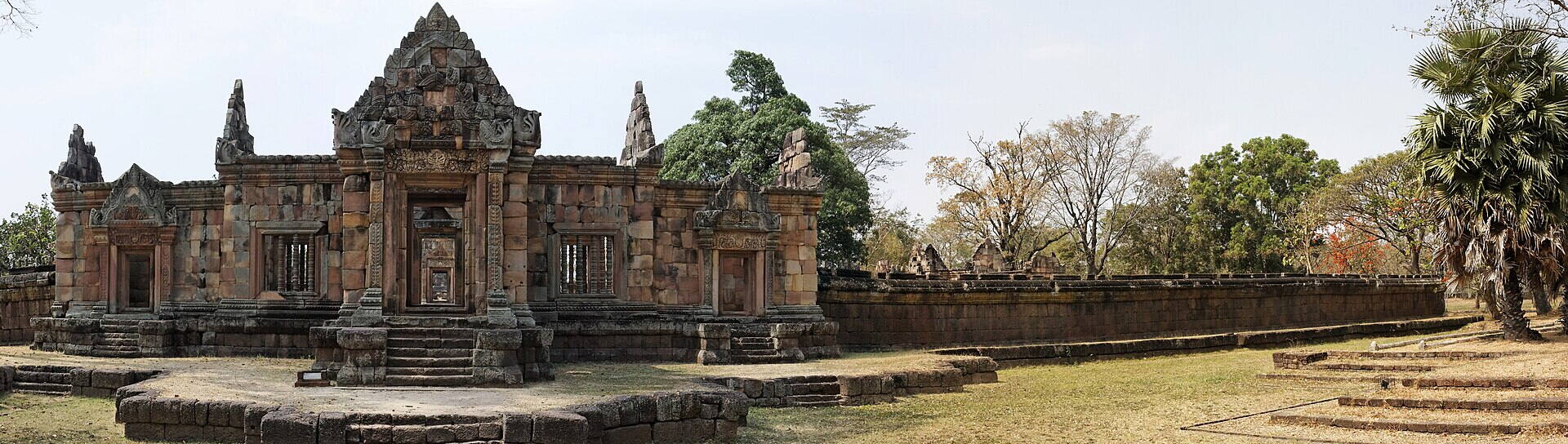

Lunchtime: back to Buriram, or one more stop. Drive back to the city, about an hour and a quarter, for lunch and a free afternoon. If you still have energy, Wat Khao Angkhan is around 30 minutes from Phanom Rung: free, open 8am to 5pm, with Dvaravati-era basalt boundary stones, a 29-metre reclining Buddha and murals with English captions. It needs an hour or so, so it adds a good two hours to the day. Temple enthusiasts can also add the smaller Khmer ruins around Mueang Tam.
Evening: if Buriram United are at home, this is the night for it (see below). If not, a quiet dinner in town.
Day 3: The Stadium, Then a Lake
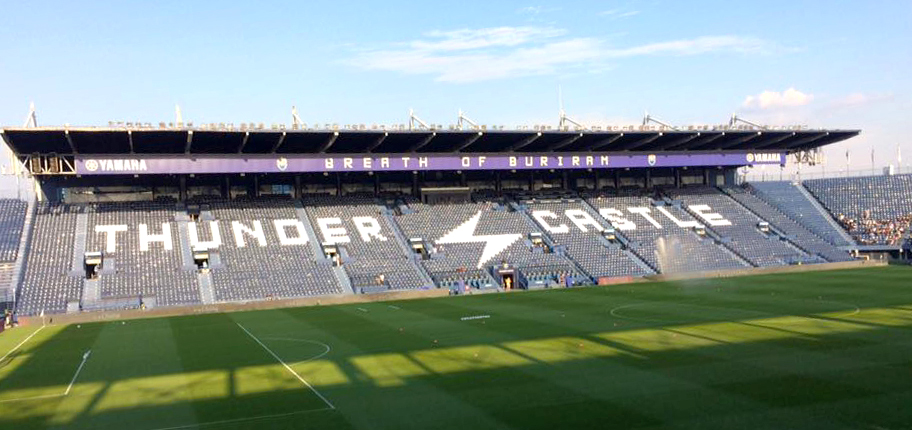
Morning: Chang Arena and the circuit. Buriram’s modern landmarks sit together at the sporting complex on the edge of the city: Chang Arena, home of Buriram United, and Chang International Circuit, home of the MotoGP Thailand round. On ordinary days there is little to do beyond seeing them from outside, so check what is on: the circuit runs track days for motorcyclists (registration is online only). If sport is not your thing, the shops at Robinson Lifestyle Center are on the same side of town.
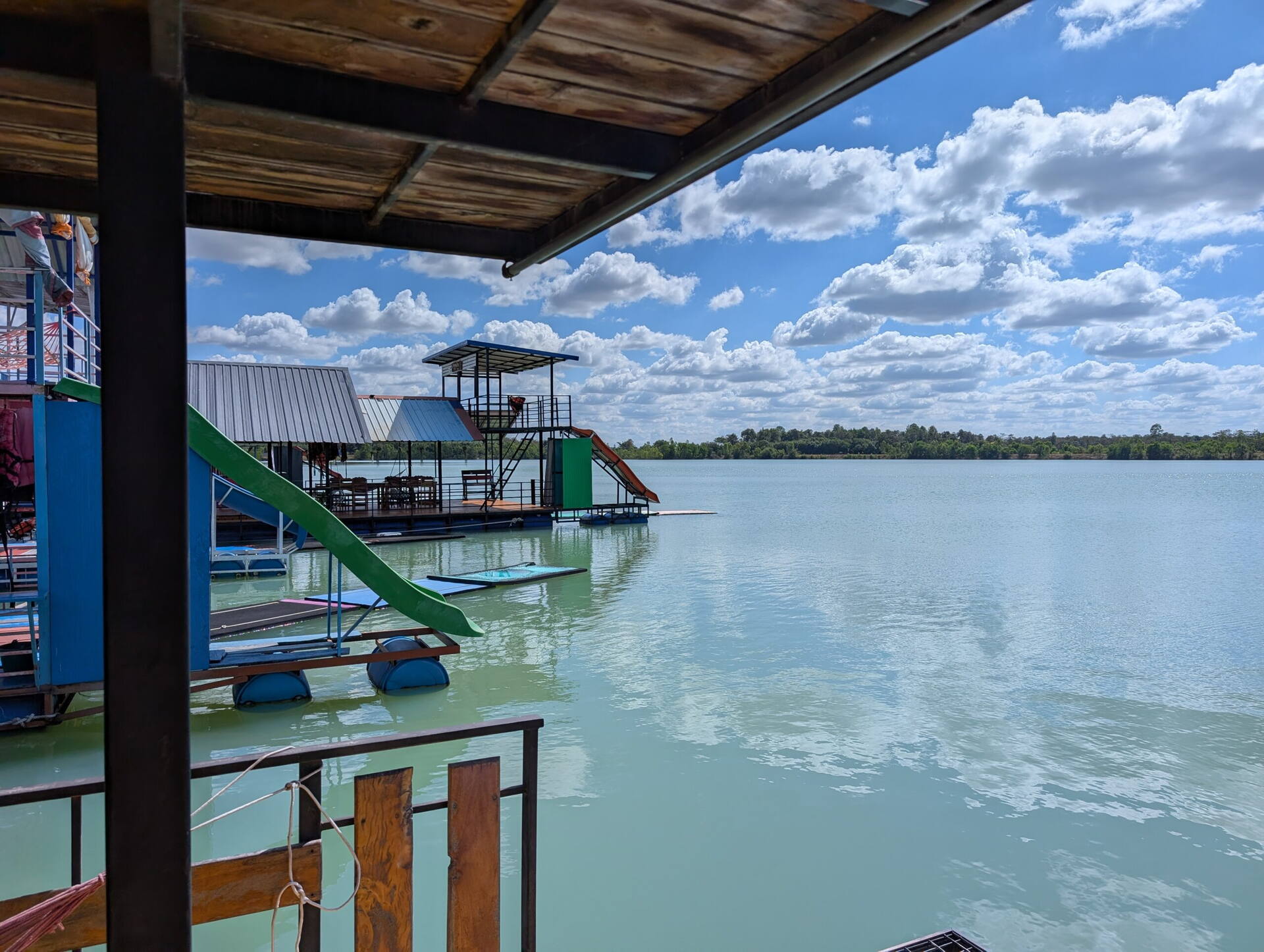
Late morning to late afternoon: Nong Tah Haeng. Finish with the most relaxed afternoon in the province. Nong Tah Haeng is a lake around an hour east of the city on the Surin border, where families rent floating rafts by the hour, order lunch straight to them and spend the afternoon in the water and the hammocks. There is no entry fee and no English signage, and it is busiest, and liveliest, at weekends and in school holidays. Details in our guide to Nong Tah Haeng.
Going home. For the 8:30am flight next morning, leave the city by about 7:30am. On the afternoon flight you have a free last morning: if the cranes did not show on day one, Huai Chorakhe Mak is at its best from about 6am to 9am. Aim to leave for the airport by about 3pm (2pm in summer).
If There Is a Match or a Race
A Buriram United home game is the best evening out in the province, and any of the three evenings is free for it. Tickets cost roughly 100 to 500 baht, can usually be bought on the day for league games (bring cash), and a taxi from the city centre to Chang Arena costs around 80 to 120 baht. Check our Buriram United fixtures page for dates and Thai kick-off times, and read our guide to attending a match before you go.
MotoGP weekend (5–7 March in 2027) is a different trip altogether: the whole city fills up, prices rise and the temples become the quiet option. Book months ahead and read our guide to where to stay for MotoGP.
Where to Stay for 3 Days in Buriram
For this plan, stay all three nights in Buriram city, where hotel choice and food are best, or at the stadium complex, where the Amari Buriram United is two minutes from Chang Arena. Our guide to Buriram hotels by area compares the options, or check hotel availability in Buriram.
If a pre-dawn start does not appeal, or you are not driving, you could spend the night before the temples in Nang Rong, the nearest town to them, instead. It means a drive after the cranes, but puts you close to Phanom Rung at opening, and the obvious choice there is Phanomrungpuri Hotel, whose reception arranges English-speaking temple tours.

- Close enough for the temple at opening without a pre-dawn start from the city
- Reception arranges English-speaking tours of Phanom Rung and Muang Tam
- Useful if you have no car
- Buriram city has far more choice, but adds the early drive
- Without a car, plan transport: taxi, songthaew or a tour
When to Go
November to February is the best time for this itinerary: dry, clear and pleasant, with daytime highs around 30°C and cool nights. March to May is very hot, and the burning season can bring smoke. June to October is the rainy season, though Mueang Tam’s ponds are at their fullest in October and November. The Buriram weather guide has month-by-month detail.
What It Costs
The sightseeing is remarkably cheap. The only paid entry on this plan is the combined Phanom Rung and Mueang Tam ticket, 250 baht for a foreign adult. Khao Kradong, Huai Chorakhe Mak, Wat Khao Angkhan and Nong Tah Haeng have no entry fee. Your real costs are the flights, the hotel, the car or driver, raft hire at Nong Tah Haeng (charged by the hour), and food, which at a night market can be under 100 baht a meal.
More Than Three Days?
Add a day for the smaller Khmer ruins such as Prasat Khao Plai Bat, a village day with the sarus crane community at Ban Suay So (bookable through our crane guide), or a trip into Surin province for the elephant village at Ban Ta Klang. Our list of the top things to do in Buriram has more ideas.
Before You Go
Mobile signal can be patchy at the temples and out in the countryside, so it is worth having data from the moment you land: get a Thailand eSIM before you arrive. And if you are wondering whether the province is safe after the 2025 border conflict, our Is Buriram Safe? guide sets out what is and is not affected.
3 Days in Buriram FAQ
Three full days is enough to see Buriram properly: Phanom Rung and Prasat Mueang Tam, the sarus cranes at Huai Chorakhe Mak, the Khao Kradong volcano, Chang Arena and the circuit, and an afternoon on the lake at Nong Tah Haeng. A single day only covers Phanom Rung.
Buriram has two Thai AirAsia flights a day each way from Bangkok Don Mueang. For three full days, take the afternoon arrival the day before you start (about 4:00pm on the winter schedule from 25 October 2026) and fly home on the 8:30am departure the morning after day three. That is three nights.
Yes, but plan it. Almost none of Buriram’s main sights has public transport, so book a car or van with a driver, or join a Phanom Rung and Mueang Tam day tour, which hotels and guesthouses arrange for roughly 1,200 to 1,800 baht per person. City taxis are not metered, so agree the fare first.
The only paid entry on this itinerary is the combined Phanom Rung and Mueang Tam ticket, 250 baht for a foreign adult (October 2026). Khao Kradong, Huai Chorakhe Mak, Wat Khao Angkhan and Nong Tah Haeng have no entry fee, though rafts at Nong Tah Haeng are hired by the hour. Night market meals can cost under 100 baht.
November to February is the best time to visit Buriram: dry and clear, with daytime highs around 30°C and cool nights. March to May is very hot and can be smoky in the burning season, and June to October is the rainy season. MotoGP weekend (5–7 March in 2027) fills the city, so book months ahead.
Stay in Buriram city for the best choice of hotels and food, or at the stadium complex, where the Amari Buriram United is two minutes from Chang Arena. To avoid a pre-dawn drive to Phanom Rung, spend the night before the temples in Nang Rong, about 25 kilometres from the temple.
Feature image: Philip Nalangan, CC BY-SA 4.0 via Wikimedia Commons.
Sarus cranes: KongkhamWichit, CC BY-SA 4.0 via Wikimedia Commons.
Prasat Mueang Tam: Ddalbiez, CC BY-SA 3.0 via Wikimedia Commons.

Buriram Live covers the real Buriram — temples, football, motorsport, rural life and practical information for visitors and those with deeper connections to the region. No fluff, no sponsored itineraries. Follow Buriram Live on Facebook for new articles and updates.
This article contains affiliate links. If you make a purchase through a link on this page, we may earn a small commission at no extra cost to you.
Get Buriram updates by email
Occasional emails when there is something worth knowing: new guides, festival and MotoGP dates, and Buriram United news. No spam, and you can unsubscribe at any time.
We will email you a link to confirm. See our privacy policy.