
Every November, something extraordinary happens in Surin.
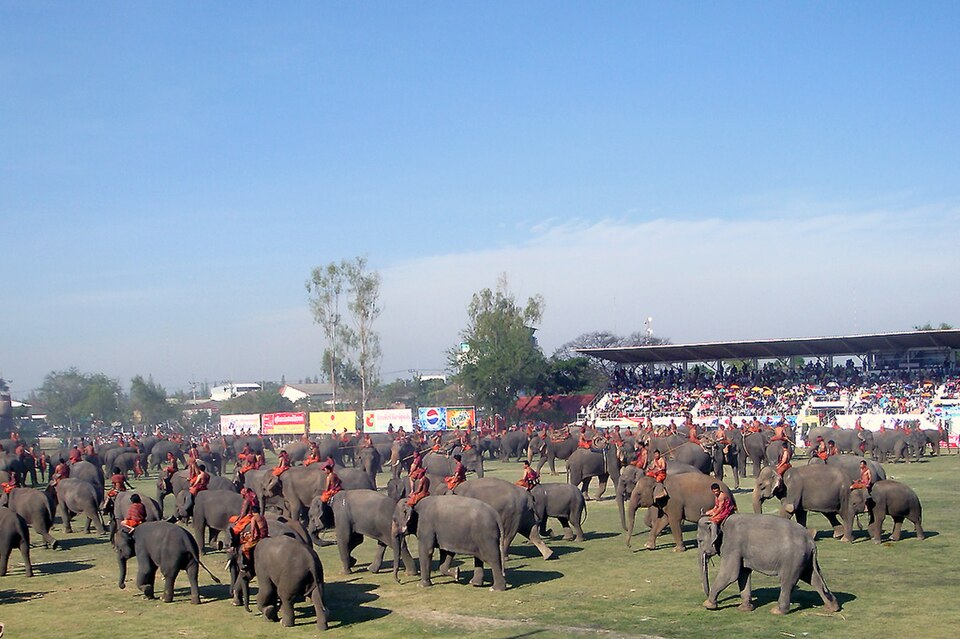
Three hundred elephants walk through the streets of the city. They are dressed in ceremonial regalia, accompanied by their mahouts, and followed by thousands of spectators lining the pavements. The procession makes its way to an outdoor stage where an enormous feast — tonnes of bananas, pineapple, sugarcane and watermelon — has been laid out across the ground. The elephants move through it freely, eating while their mahouts stand alongside.
The Surin Elephant Festival is Thailand’s largest elephant gathering and one of the most extraordinary spectacles in all of Southeast Asia. For visitors staying in Buriram, it is 50 minutes away by train.
The Kuy People: Centuries of Elephant Culture
To understand the Surin Elephant Festival, you need to understand the Kuy.
The Kuy (also written Kui or Kuay) are an ethnic group indigenous to the borderlands of present-day Thailand, Cambodia and Laos. In Thailand, they are concentrated in Surin, Buriram, Sisaket and the surrounding provinces — the same stretch of Northeast Thailand where the great Khmer temples were built.
For centuries, the Kuy were the elephant people of mainland Southeast Asia. They developed the techniques of tracking, capturing and taming wild elephants. They bred the mahouts who worked alongside them. And they built a culture in which the bond between a man and his elephant was one of the most significant relationships a person could form — not a working arrangement, but something closer to a lifelong partnership, often beginning in childhood and lasting decades.
An estimated 25 per cent of all domesticated elephants in Thailand are raised in Surin by Kuy families. That concentration of knowledge, tradition and living animals has no parallel anywhere in the country. In 2012, Kuy elephant wisdom — คชศาสตร์ชาวกูย — was added to Thailand’s national intangible cultural heritage list.
The festival in its modern form dates to the 1960s, when civil war in Cambodia and the collapse of the logging industry stripped working elephants of their economic role. With no forests to work and no income from timber, mahout families faced a genuine crisis. The festival was partly a response to that — a mechanism for sustaining both the elephant population and the families whose identity was bound up with them.

What Happens at the Surin Elephant Festival
The festival runs across the third weekend of November each year, centred on Si Narong Stadium in Surin city. In 2026, the dates are Friday 20 to Sunday 22 November.
The programme divides into two quite different experiences, and it’s worth understanding which is which before you go.
The Elephant Breakfast and Parade (Friday)
The opening day is the highlight for many visitors — and the one that draws the least criticism.
Elephants parade through Surin’s streets in full ceremonial dress and are brought to the feast that has been prepared for them: an enormous spread of fruit and vegetables laid out in colourful displays across the ground. The elephants eat freely, trunks reaching for whatever catches their interest, while crowds watch from the sides. The scale of it — hundreds of animals, the colour and noise of the procession, the sheer improbability of the scene — is genuinely unlike anything else in the region.
Arriving on Thursday evening is recommended by those who know the festival well. Some mahouts walk their elephants up to 100 kilometres to reach Surin for the event, and the sight of elephants making their way into the city along the main roads the night before is an experience in itself — informal, unhurried, and far removed from the staged spectacle of the weekend shows.
The Stadium Shows (Saturday and Sunday)
The weekend stadium programme is a different matter, and deserves honest description.
The shows include elephant football matches, tug-of-war contests between elephants and soldiers, artistic painting demonstrations, and a dramatic re-enactment of a historic Siamese-Burmese battle. The elephants perform on cue; handlers use control equipment including bull hooks; the atmosphere is closer to a circus than a nature experience.
Animal welfare organisations have documented concerns about training methods used for these performances, and the use of restraint and control tools during shows. These are not isolated reports — they are consistent across multiple independent sources.
This does not mean the festival as a whole should be avoided. The mahout families of Surin have genuine, centuries-deep bonds with their elephants, and the festival generates income that supports both. But visitors should go into the stadium shows knowing what they are watching. The elephant breakfast on Friday morning involves considerably less performance pressure on the animals, and is the more considered choice for those with welfare in mind.
A Different Way to Be Around Elephants
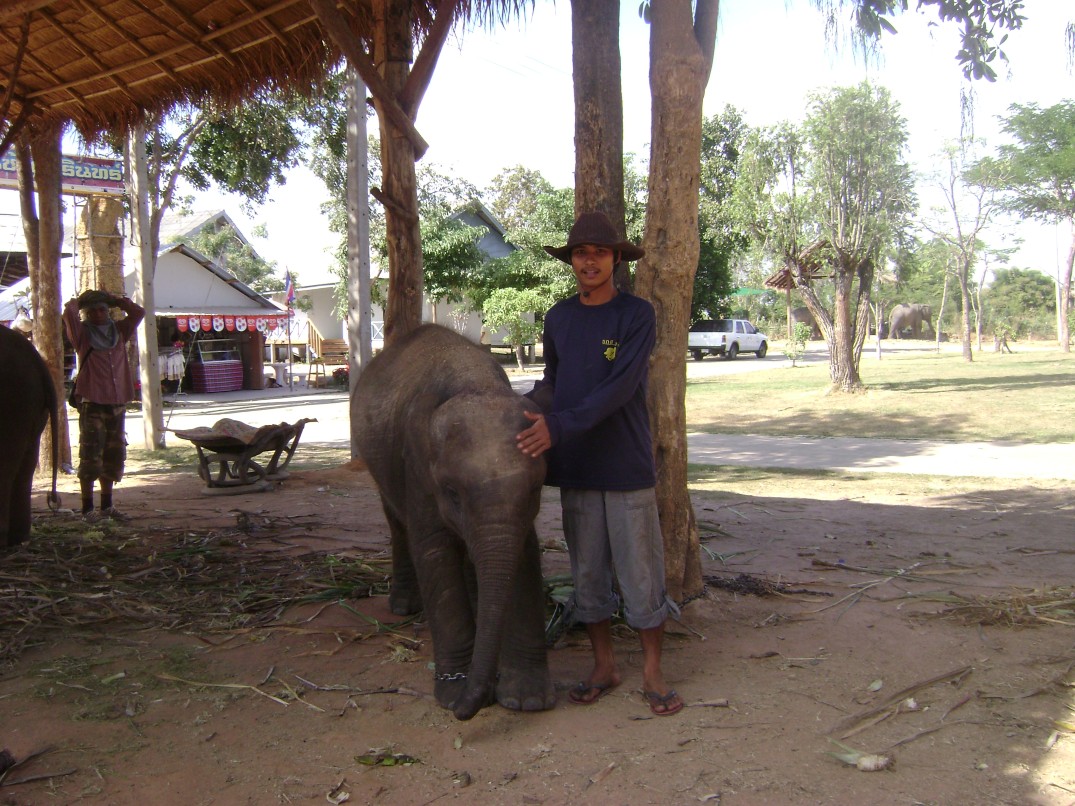
About 58 kilometres north of Surin city, the village of Ban Ta Klang is home to the largest concentration of domesticated Asian elephants on earth. The Save Elephant Foundation operates a project there — the Surin Project — that works alongside mahout families with the aim of improving elephant welfare within the village. It takes a different approach to the festival’s stadium shows: focusing on the relationship between mahouts and their elephants rather than performance.
It is a quieter experience than the Roundup — no crowds, no spectacle — but for visitors who want to engage with elephants in a more considered way, it is worth knowing about.
We cover Ban Ta Klang in detail in a separate guide: Ban Ta Klang: Your Ultimate Guide to Thailand’s Elephant Village
Getting There from Buriram
Buriram to Surin is one of the easiest journeys in Northeast Thailand.
By train: Five State Railway of Thailand services run daily between Buriram and Surin. The journey takes approximately 50 minutes, with tickets from around 40 baht for third class. Book well in advance for the festival weekend — services fill quickly.
Book Buriram to Surin train tickets
By car: Highway 226 runs directly between the two cities — approximately 53 kilometres, around 50 minutes in normal conditions. During the festival weekend, expect significant traffic in Surin city and limited parking.
When to Go
The festival takes place on the third weekend of November every year.
2026 dates: Friday 20 – Sunday 22 November 2026
Friday is the day for the elephant breakfast and street procession — the part most visitors remember most vividly. If you can only go for one day, go on Friday.
The same weekend includes the Mueang Chang half-marathon, food stalls across the city, and local craft markets. There is plenty to fill a full day alongside the main elephant programme.
Where to Stay
Stay in Surin
Accommodation in Surin books out months in advance for the festival weekend — this is not an exaggeration. If you want to be in the city for Thursday evening’s elephant arrivals and the Friday morning procession, book as early as you possibly can.
Well-regarded hotels in Surin city include the Thong Tarin Hotel, Sorin Hotel, Slive Hotel and Hop Inn Surin. Prices during the festival weekend will be significantly higher than the city’s normal average.
Search hotels in Surin on Agoda
Day trip from Buriram
If you’re based in Buriram, a day trip is entirely practical. The train is 50 minutes each way, and an early service gets you there well before the main events begin. This sidesteps the accommodation problem entirely — and Buriram has considerably more choice at better prices, even during the festival period.
Planning to explore more of Surin province while you’re there? Our complete Surin province guide covers the APEC silk village, ancient Khmer temples, and everything else worth seeing in the region.
Practical Information
| Festival name | Surin Elephant Round-Up |
| 2026 dates | Friday 20 – Sunday 22 November 2026 |
| Venue | Si Narong Stadium and Surin city streets |
| Best day | Friday — elephant breakfast and street procession |
| Distance from Buriram | ~53km, ~50 minutes by train |
| Accommodation | Book months in advance for the festival weekend |
Before You Go
A trip to Surin during the festival weekend means crowds, heat and a full day on your feet. Travel insurance is worth having.
Get a travel insurance quote for Thailand
Feature image: Luc Ockers, CC BY-SA 3.0, via Wikimedia Commons. Elephant festival image: Per Meistrup, CC BY-SA 3.0, via Wikimedia Commons. Ban Ta Klang photograph own.

Buriram Live is an independent guide to Buriram province and Northeast Thailand.
This article contains affiliate links. If you book through them, we may earn a small commission at no extra cost to you.

Get Buriram updates by email
Occasional emails when there is something worth knowing: new guides, festival and MotoGP dates, and Buriram United news. No spam, and you can unsubscribe at any time.
We will email you a link to confirm. See our privacy policy.