
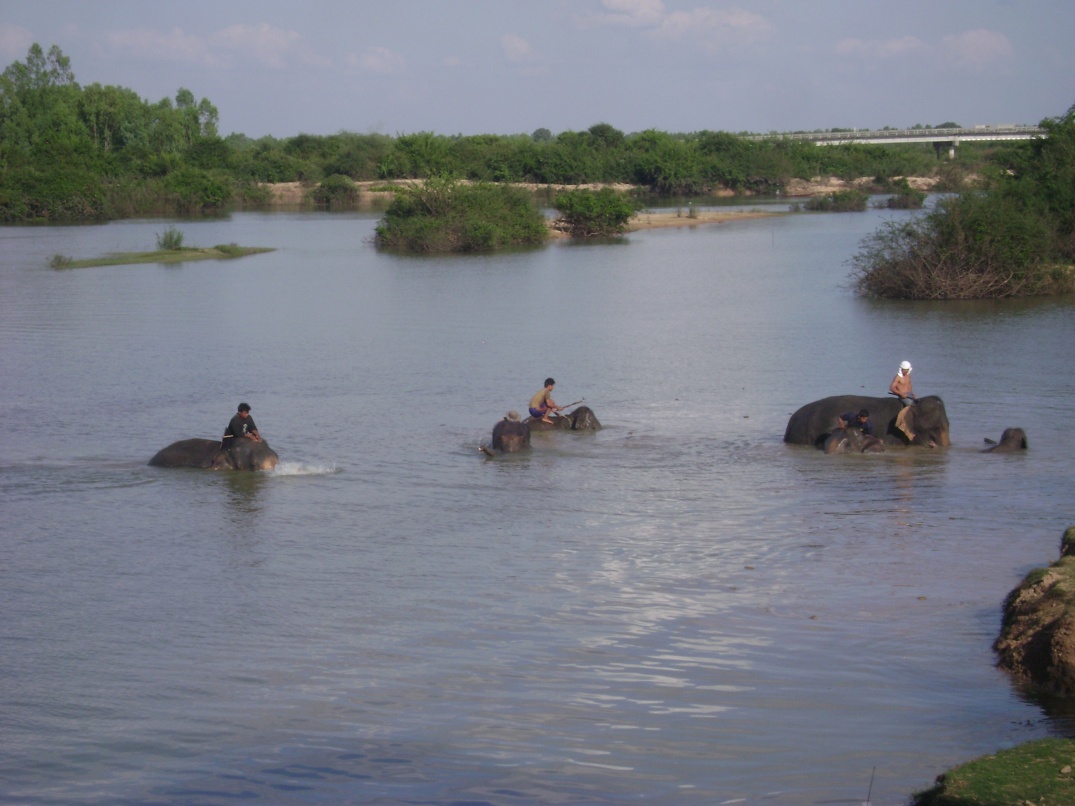
Early in the morning at Ban Ta Klang elephant village, before the tourist coaches arrive, the elephants go to the river.
Their mahouts guide them down the bank and into the water — a daily ritual that has played out on this stretch of the Mun River for generations. The elephants lower themselves into the shallows, trunks reaching for water, while the mahouts scrub and wash beside them. In the dry season the river runs wide and calm. A dozen elephants might be in at once.
This is Ban Ta Klang elephant village. Three hundred elephants. One village. The largest concentration of domesticated Asian elephants anywhere on earth — and the living home of the Kuy people, who have been raising, training and working alongside elephants for longer than written records exist.
What is Ban Ta Klang Elephant Village?
Ban Ta Klang is a village in Tha Tum district, Surin province, around 58 kilometres north of Surin city on Route 214. In Thai, ban simply means village, and the name is ordinary enough — but the village is anything but.
Around 300 elephants live here at any given time, owned by families throughout the community. They are not zoo animals or tourist props, though tourism is now part of the picture. They are working members of households, in the same way that a farming family elsewhere might keep cattle or water buffalo. Elephants are tethered under trees, roam village paths, and stand in the shade while their owners go about their day.
The Surin Elephant Study Centre, founded in 2007, sits at the heart of the village alongside an elephant museum and the daily show arena. But the village extends beyond the formal tourist area — and that broader village, with its ordinary domestic elephants and the families who live alongside them, is what makes Ban Ta Klang unlike anywhere else.
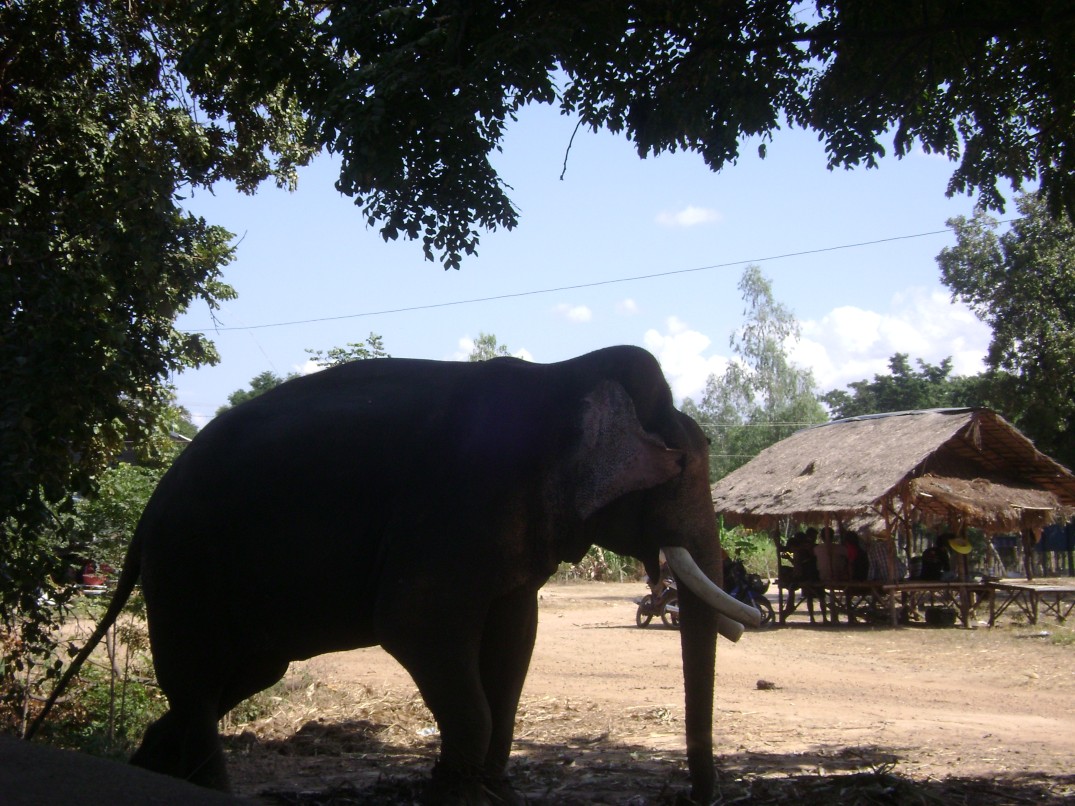
The Kuy People
The people of Ban Ta Klang are predominantly Kuy — sometimes written Kui, Kuay, or Suay. They are a Mon-Khmer speaking ethnic group who have lived across the southern Isaan plateau for centuries, concentrated in the provinces of Surin, Buriram, Si Sa Ket and Ubon Ratchathani. There are an estimated 220,000 Kuy in Thailand today.
The word kuy in their own language simply means “people” — the same basic meaning as the word thai in Thai. The name suay comes from a Thai word meaning those who pay tribute — a reference to the historical relationship between the Kuy and the kingdoms that ruled this region.
What set the Kuy apart from their neighbours was a specific and extraordinary skill: they could find wild elephants in the deep forest, catch them alive, and bring them home tamed.
The Elephant Catchers
The specialists within the Kuy community were known as hmor ajiang — elephant doctors. These were men who had inherited not just the physical skills of elephant catching, but a deep body of ritual knowledge: the right ceremonies to perform before entering the forest, the rules to follow while in pursuit, the spiritual relationship between a man and the elephant he had caught.
Their tool was the pakam — a rope of carefully prepared leather, looped into a lasso. The hmor ajiang would enter the forest on elephant-back, sometimes spending months deep in the jungle along the Dangrek mountain range that forms the border with Cambodia. When they found a wild elephant worth catching, they would work in teams — approaching on their own elephants, drawing alongside the target, and dropping the pakam around one of its hind legs before controlling it into submission.
The Kuy supplied elephants to the great kingdoms of the region — to the Khmer empire, and later to the Thai kingdom of Ayutthaya, which maintained an elephant cavalry at the heart of its military. A single war elephant was a formidable asset. The men who could reliably produce them were correspondingly valued. Kuy elephants and Kuy elephant trainers were known across Southeast Asia.
Thailand registered this tradition on its national intangible cultural heritage list in 2012.
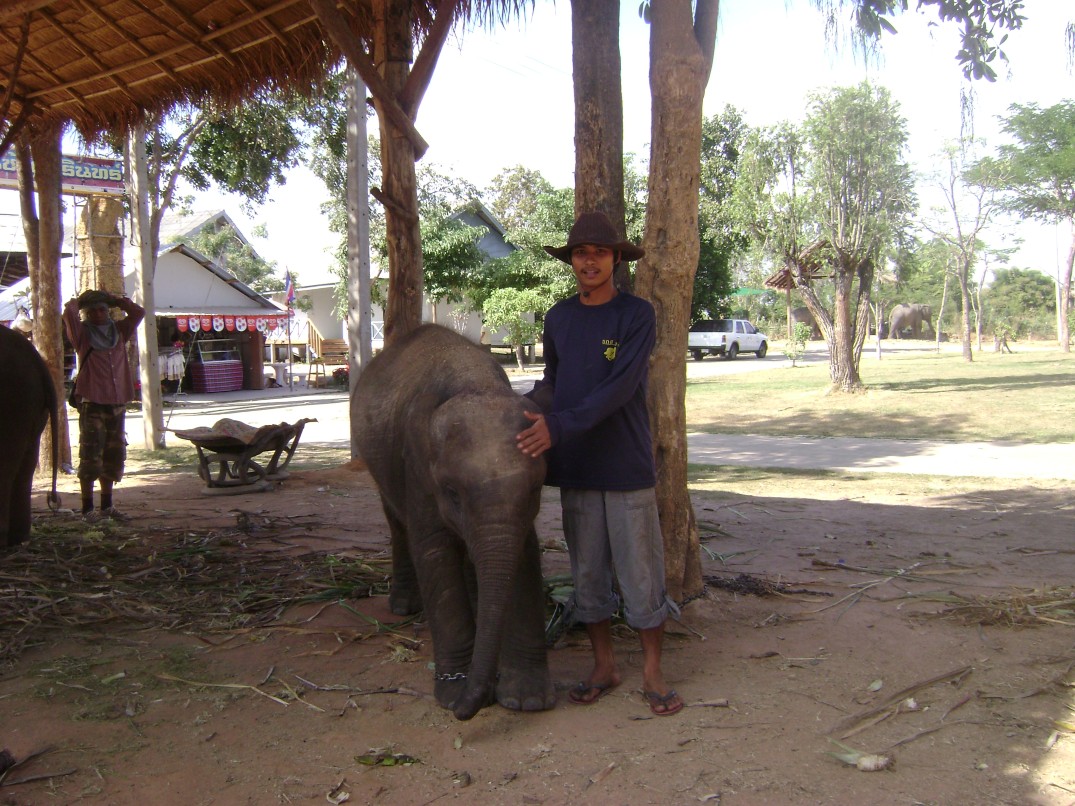
Why the Catching Ended
The Kuy were still entering the forest to catch wild elephants into the twentieth century. However, what ended the practice was not a change of heart but a political border.
The Dangrek mountains — the traditional elephant-catching grounds — became a contested zone as relations between Thailand and Cambodia deteriorated in the 1950s. The forest paths the Kuy had used for generations were no longer safe to travel. Without access to the wild elephant population on the Cambodian side of the mountains, the tradition simply could not continue.
The last elephant catches took place sometime in the late 1950s or early 1960s. The hmor ajiang who survived into the modern era carried knowledge that had nowhere left to go. That knowledge, and its context, is part of what the museum at Ban Ta Klang now works to preserve.
Ban Ta Klang Today
The Surin Elephant Study Centre occupies a substantial area of the village, with a show arena, shaded seating, a museum building, and elephant shelters. The museum tells the history of the Kuy people and their elephants through displays, artefacts and a gallery of elephant-related art.
The show runs twice daily at 10:00 and 14:00. Elephants demonstrate the skills they have been trained in — painting, balancing, playing football — alongside demonstrations of traditional mahout techniques. Attitudes toward elephant entertainment have changed significantly in recent decades, and the show at Ban Ta Klang is not a wildlife sanctuary experience. What it does reflect, for better or worse, is a working relationship between people and elephants that is older than the show itself.
The more affecting part of Ban Ta Klang is simply the village — and the river bathing. At some point in the day — morning or afternoon — the mahouts lead their animals down to the river. The elephants disappear up to their shoulders in the water while the mahouts wash and scrub beside them. The easy familiarity between a man and an animal he has known since birth is not something you see at a zoo.
Admission to the Study Centre is 50 baht for Thai nationals; foreigners pay more — typically 100–200 baht, though this can vary and is worth checking on arrival.
The Surin Elephant Round-Up
Every November, Ban Ta Klang provides the core of the Surin Elephant Round-Up — one of Thailand’s most spectacular festivals, held at a stadium in Surin city. Hundreds of elephants parade, demonstrate historical battle formations, and compete in a tug-of-war with hundreds of soldiers. The festival draws tens of thousands of visitors and is the event most people associate with Surin province.
The elephants in the Round-Up are the elephants of Ban Ta Klang. The mahouts who guide them through the formations are the Kuy of Ban Ta Klang. The spectacle in the stadium and the quiet daily bathing at the river are the same tradition — one dressed for an audience, one simply part of the day.
Ban Ta Klang sits within Surin province — a region with much more to offer, from the APEC silk weaving village of Ban Tha Sawang to the 12th-century Khmer temple at Prasat Sikhoraphum.
Getting There from Buriram
Ban Ta Klang elephant village is around 90–100 kilometres from Buriram city, making it a comfortable day trip. The most direct route goes south from Buriram toward Surin on Highway 226, then north on Route 214 from Surin city toward Tha Tum — the village is signposted.
By car the drive is around 1.5–2 hours each way. The road is good throughout. Combining Ban Ta Klang with a visit to Surin city — 30 minutes south — makes a full day.
Compare car hire rates for the Buriram–Surin route
Public transport is possible but slow: bus from Buriram to Surin, then songthaew north to Ban Ta Klang (60 baht quoted from Surin bus station). Most visitors find a hired car or private driver far easier.
When to Go
Early in the day tends to be quieter, before tour groups arrive — but river bathing happens at various points through the day, morning or afternoon. There is no single guaranteed slot; it is simply part of the daily routine of the village.
November brings the Surin Elephant Round-Up, when the village is at its most active — though accommodation in Surin books out months in advance and the festival draws large crowds.
The dry season (November–February) makes the river bathing particularly photogenic — the river runs wide and clear, and the light is good.
Practical Information
| Location | Ban Ta Klang, Tha Tum district, Surin province |
| Distance from Buriram | ~95km, approximately 1.5–2 hours by car |
| Distance from Surin city | 58km north on Route 214 |
| Show times | 10:00 and 14:00 daily |
| Admission | 50 baht (Thai nationals) / 100–200 baht (foreigners) — verify on arrival |
| Best time to visit | Dry season (Nov–Feb); arrive early to avoid tour groups |
Before You Go
Buriram to Ban Ta Klang is a long day on Thai roads. Travel insurance is worth having.
Get a travel insurance quote for Thailand
All photographs own. Ban Ta Klang, Surin province, December 2009.
Buriram Live covers the real Buriram — temples, football, motorsport, rural life and practical information for visitors and those with deeper connections to the region. No fluff, no sponsored itineraries. Follow Buriram Live on Facebook for new articles and updates.
This article contains affiliate links. If you make a purchase through a link on this page, we may earn a small commission at no extra cost to you.

Get Buriram updates by email
Occasional emails when there is something worth knowing: new guides, festival and MotoGP dates, and Buriram United news. No spam, and you can unsubscribe at any time.
We will email you a link to confirm. See our privacy policy.