
Buriram is perhaps best known internationally as the birthplace of Lisa from BLACKPINK. Less well known is that the province has a language of its own — and that the communities living in the shadow of Phanom Rung, the ancient Khmer temple that draws visitors from across Thailand, are not speaking Thai at all.
They are speaking a language that has been here far longer than Thailand itself.
What Is Northern Khmer?
Northern Khmer — sometimes called Khmer Surin or Khmer Leu — is a language spoken across parts of Buriram, Surin, and Sisaket provinces in southern Isaan. It is widely spoken in many communities across the Buriram-Surin border area, woven into daily life in villages, markets, and homes throughout the region.
It belongs to the Austroasiatic language family — the Mon-Khmer branch. This is not a dialect of Thai, not a simplified form of Lao, and not a creole that developed from contact with neighbouring languages. It is a language in its own right, with its own grammar, vocabulary, and phonology, entirely unrelated to Thai at the structural level.
This distinction matters. A Thai speaker hearing Northern Khmer for the first time understands nothing. The languages share loanwords — both have drawn heavily from Sanskrit and Pali over the centuries — but they come from completely different linguistic roots.
Where Did It Come From?
The answer is standing at Phanom Rung.
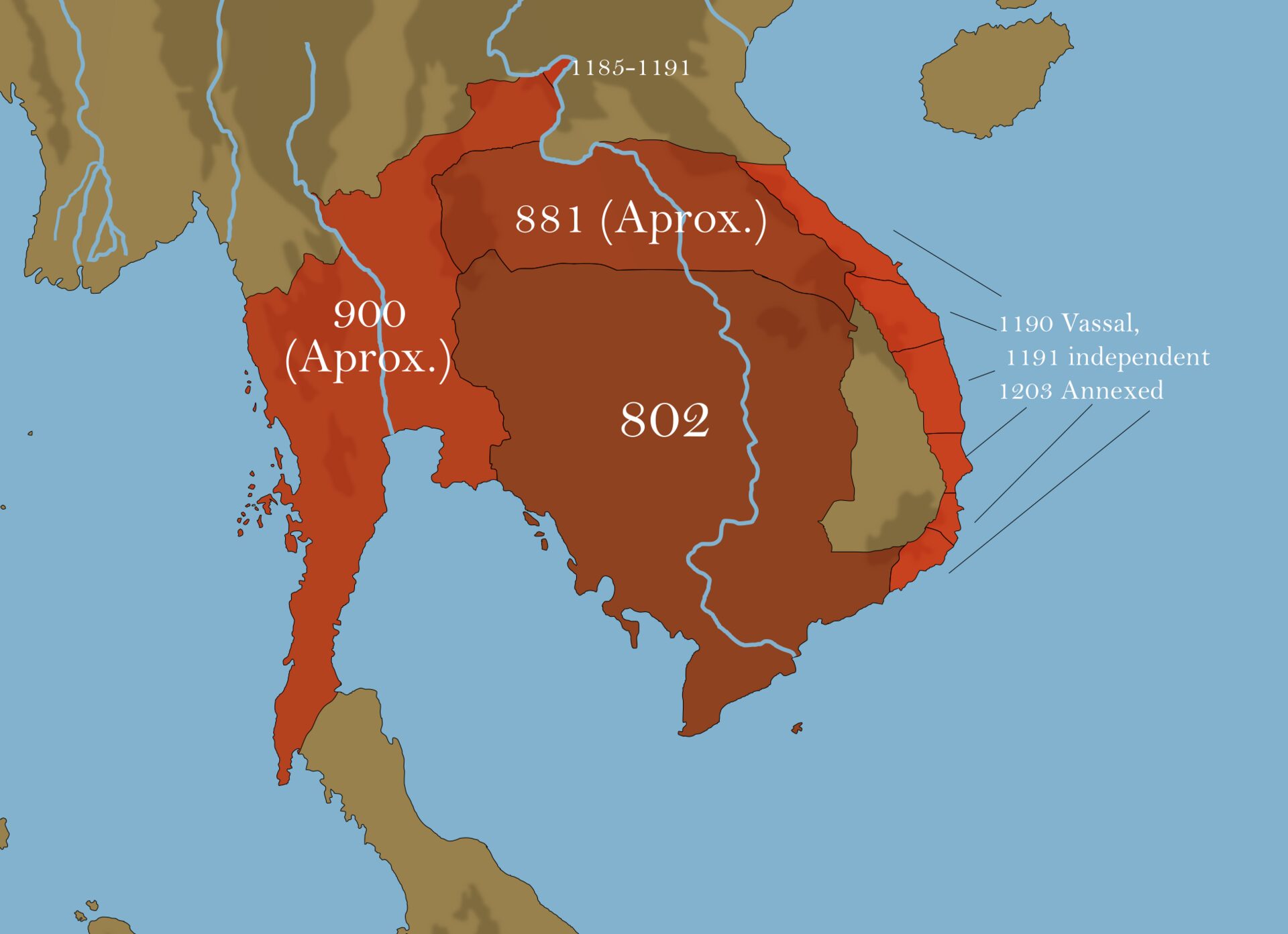

The Khmer empire, at its height between the ninth and thirteenth centuries, extended deep into what is now northeast Thailand. The temples of Phanom Rung and Mueang Tam were not outposts on a distant frontier — they were significant religious and administrative centres within Khmer cultural territory. The people who built those sanctuaries, who maintained them, who farmed the surrounding land and traded along the routes between them, spoke a form of Khmer.
When the Khmer empire declined and political control shifted northward toward Ayutthaya, those communities did not move. They stayed. The temples fell into disuse. The language did not.
The Northern Khmer speakers of Buriram and Surin today are, in a very real sense, the direct descendants of the people who built Phanom Rung. That continuity — a living linguistic thread connecting the eleventh century to the present — is remarkable, and almost entirely invisible to the outside world.
How Different Is It From Thai?
Completely different.
Thai is a tonal language belonging to the Tai-Kadai family. Khmer is not tonal — meaning the pitch of your voice does not change the meaning of a word — and belongs to an entirely separate language family with no common ancestor with Thai.
Thai grammar and Khmer grammar work differently. The scripts look different, though Thai script was partly derived from older Khmer script via intermediate forms. A fluent Thai speaker has no more intuitive understanding of Khmer than an English speaker does.
Most Northern Khmer speakers in Buriram and Surin are effectively bilingual: Khmer at home and within the community, and Central Thai for school, government, and official life. In areas where Khmer and Thai-speaking communities overlap, Isaan Thai also features as a common tongue — but in many villages along the Buriram-Surin border, the daily reality is simply Khmer and Thai.
How Different Is It From Cambodian Khmer?
Substantially different — and the distinction is worth understanding.
Northern Khmer and Cambodian Khmer share a common ancestor, but they have been developing largely independently for somewhere between six and eight centuries. Since the decline of the Khmer empire, the communities on either side of what eventually became the Thai-Cambodian border evolved in different directions. Northern Khmer absorbed large quantities of Thai and Lao vocabulary. Its phonology shifted. Certain sounds changed. The rhythm and texture of the language diverged.
The result is that a Cambodian Khmer speaker encountering Northern Khmer will recognise much of the vocabulary but will find the pronunciation unfamiliar and the flow of the language different from what they know. Communication is possible with effort, but the two are not simply interchangeable.
There is also a cultural dimension. Northern Khmer speakers in Thailand are Thai nationals with a Thai-Isaan identity. Their language carries the heritage of the ancient Khmer world, but their lives, their loyalty, and their daily culture are rooted in Thailand. Northern Khmer is a Thai language — it happens to belong to the Khmer branch of the Austroasiatic family, but it is not a transplant from across the border. It grew here.
A Few Words and Phrases
The table below gives standard Khmer equivalents as a guide. Northern Khmer pronunciation varies by community and differs in places from Cambodian Khmer — if you have the chance to ask a local speaker, do so.
| Khmer Surin | Approximate pronunciation | Meaning | Notes |
|---|---|---|---|
| អរគុណ | Arkoun | Thank you | |
| សុខសប្បាយ? | Sok sabay? | How are you? / Are you well? | Common greeting |
| ចា / បាទ | Jah (female) / Baat (male) | Yes | Response varies by speaker’s gender |
| អត់ | Ot | No / not | |
| បង | Bong | Elder sibling; I (man to woman, intimate) | Gender-neutral address for someone slightly older |
| នាង | Neang | Young woman; you (man to woman, intimate) | Used as second person in romantic speech |
| បារាំង | Barang | Foreigner / Westerner | From French “français” — a legacy of French Indochina |
| ស្រលាញ់ | Sralanh | To love | |
| បាយ | Bai | Cooked rice | |
| ទឹក | Tuk | Water | |
| ផ្ទះ | Phteah | House / home |
One phrase worth knowing: Bong sralanh Neang — literally “elder brother loves young lady,” but used in romantic speech as the equivalent of “I love you,” said by a man to a woman. It is one of the more poetic expressions in the Northern Khmer repertoire.
The etymology of barang is a small piece of history in itself. The Khmer word for Westerner entered the language during the French colonial period in Indochina — a linguistic fossil from an era that reshaped the region and left traces still audible in everyday speech.
Kantruem: Northern Khmer in Music
The language also has a musical tradition of its own. Kantruem (sometimes written kantrum) is the folk music of the Northern Khmer communities in Surin and Buriram — fast, rhythmic, built around percussion and fiddle, with call-and-response singing that moves freely between Northern Khmer and Thai. It is one of the few musical forms in Thailand that treats the Khmer language as a natural vehicle for contemporary expression rather than a historical curiosity.
Contemporary artists like Big Surin (บิ๊กสุรินทร์), one of the most popular musicians in the Surin-Buriram region, bring that tradition to modern audiences. His track หนุ่มสุรินทร์ (Young Man from Surin) is a good introduction to the sound — and if you listen closely, you will catch phrases like Bong sralanh Neang woven through the lyrics alongside Thai.
Is the Language Fading?
Not in any meaningful sense in the communities where it matters most.
Northern Khmer has no standardised written form used in daily life. Most speakers write in Thai, and school is conducted in the national language. That creates a real gap between spoken fluency and written literacy.
But as a spoken language, Northern Khmer is in good health. In villages across Buriram and Surin, it remains the natural language of home and community — spoken in kitchens, at markets, between neighbours, passed between generations not through textbooks but through daily life.
The language outlasted an empire. It is not going anywhere.
Considering travel insurance for your trip? Get a travel insurance quote for Thailand — World Nomads covers more than 150 adventure activities as well as emergency medical, lost luggage, and trip cancellation.
For longer stays, Get a Nomad Insurance quote — SafetyWing offers flexible monthly cover with no long-term commitment — useful if you are planning an extended visit to the region.
Feature image: Ddalbiez, CC BY-SA 3.0 via Wikimedia Commons
Buriram Live covers the real Buriram — temples, football, motorsport, rural life and practical information for visitors and those with deeper connections to the region. No fluff, no sponsored itineraries. Follow Buriram Live on Facebook for new articles and updates.
This article contains affiliate links. If you make a purchase through a link on this page, we may earn a small commission at no extra cost to you.
Get Buriram updates by email
Occasional emails when there is something worth knowing: new guides, festival and MotoGP dates, and Buriram United news. No spam, and you can unsubscribe at any time.
We will email you a link to confirm. See our privacy policy.