
Buriram province has been attracting growing interest from foreigners — some drawn by the MotoGP, some by family connections in the region, some simply by the reality that land here remains significantly more affordable than in coastal or tourist areas. That interest naturally raises the question of what, legally, a foreigner can actually do with Thai land.
The short answer is that foreigners cannot own land in Thailand in the way most Western countries would understand land ownership — outright, registered in their name, with full freehold title.
This is not a technicality or a matter of interpretation. It is explicit in the Thai Land Code Act, which reserves land ownership for Thai nationals and certain juristic entities. Attempting to circumvent this law carries serious legal risk.
That said, there are several legitimate routes through which foreigners can secure meaningful, legally protected rights over land in Thailand. Understanding the difference between those routes — and the risks attached to each — is the starting point for anyone considering land in this country.
Understanding Thai Land Titles
Before anything else, understand what type of title document covers the land you are looking at. Not all Thai land titles are equal.
Chanote (NS-4J / โฉนดที่ดิน) is the gold standard. It is a fully surveyed freehold title, GPS-accurate, registered at the Land Department. If you are making a significant commitment to any piece of land, you want a chanote.
Nor Sor 3 Gor (NS-3K) is the next tier down — a certificate of use that can be converted to chanote. Legitimate and commonly used, but verify that conversion is possible before proceeding.
Nor Sor 3 and below represents lower grades of documentation. These are not recommended for significant investment. Rights are less clearly defined, boundaries may be approximate, and disputes are harder to resolve.
For any transaction, insist on seeing the original title document and verifying it against Land Department records. A Thai property lawyer can do this for you.
The 30-Year Lease
The most common route for foreigners is a registered long-term lease. Under Thai law, leases of three years or more must be registered at the Land Office to be enforceable — unregistered leases are valid only for three years regardless of what the contract says.
A registered lease can run for a maximum of 30 years. After that, the land reverts to the owner unless a new lease is negotiated and registered.
You will often see leases advertised as “30+30+30” — three consecutive 30-year terms totalling 90 years. It is important to understand that under current Thai law, only the first 30 years are legally enforceable. Renewal clauses written into the original contract are generally not enforceable as a right — they depend on the goodwill of whoever holds the land at renewal time, which may not be the same person you originally contracted with.
This is not a reason to avoid leases — they provide meaningful, registered legal protection for the lease period. But go in clear-eyed about what the 30-year limit means in practice.
A well-drafted lease should address:
- Your right to build structures on the land
- Your right to sublet if needed
- What happens to structures you build at the end of the lease
- Conditions under which the lease can be terminated early
Usufruct
A usufruct (สิทธิอาศัย / สิทธิเก็บกิน) is a registered right to use and benefit from land for a specified period — or for the lifetime of the beneficiary. It is one of the stronger legal protections available to foreigners in Thailand.
Key characteristics:
- Can be registered at the Land Office, giving it legal force against third parties
- Allows the holder to use and benefit from the land — to commission building work, to have it farmed through Thai labour, and in principle to receive income from it, though separate restrictions on foreign labour and business activity affect what a foreigner can personally do in practice
- Cannot be sold or transferred, but can allow others to use the land with the holder’s permission
- Lasts for the lifetime of the holder, or up to 30 years if a fixed term is specified
- Cannot be inherited — it ends at death
A usufruct is particularly well-suited for situations where a foreign national wants security of use over land registered in a Thai partner’s name. Because it is registered against the title at the Land Office, a subsequent sale of the land does not extinguish the usufruct — the new owner takes the land subject to the existing right.
Superficies
A superficies (สิทธิเหนือพื้นดิน) grants the right to own structures built on land, separately from ownership of the land itself. It can run for up to 30 years and can be renewed.
This is less commonly used than a usufruct but may be appropriate in specific circumstances — for example, where the primary concern is protecting the value of buildings constructed on leased land. Like usufructs and long-term leases, it must be registered at the Land Office to have legal force.
Land in a Thai Spouse’s Name
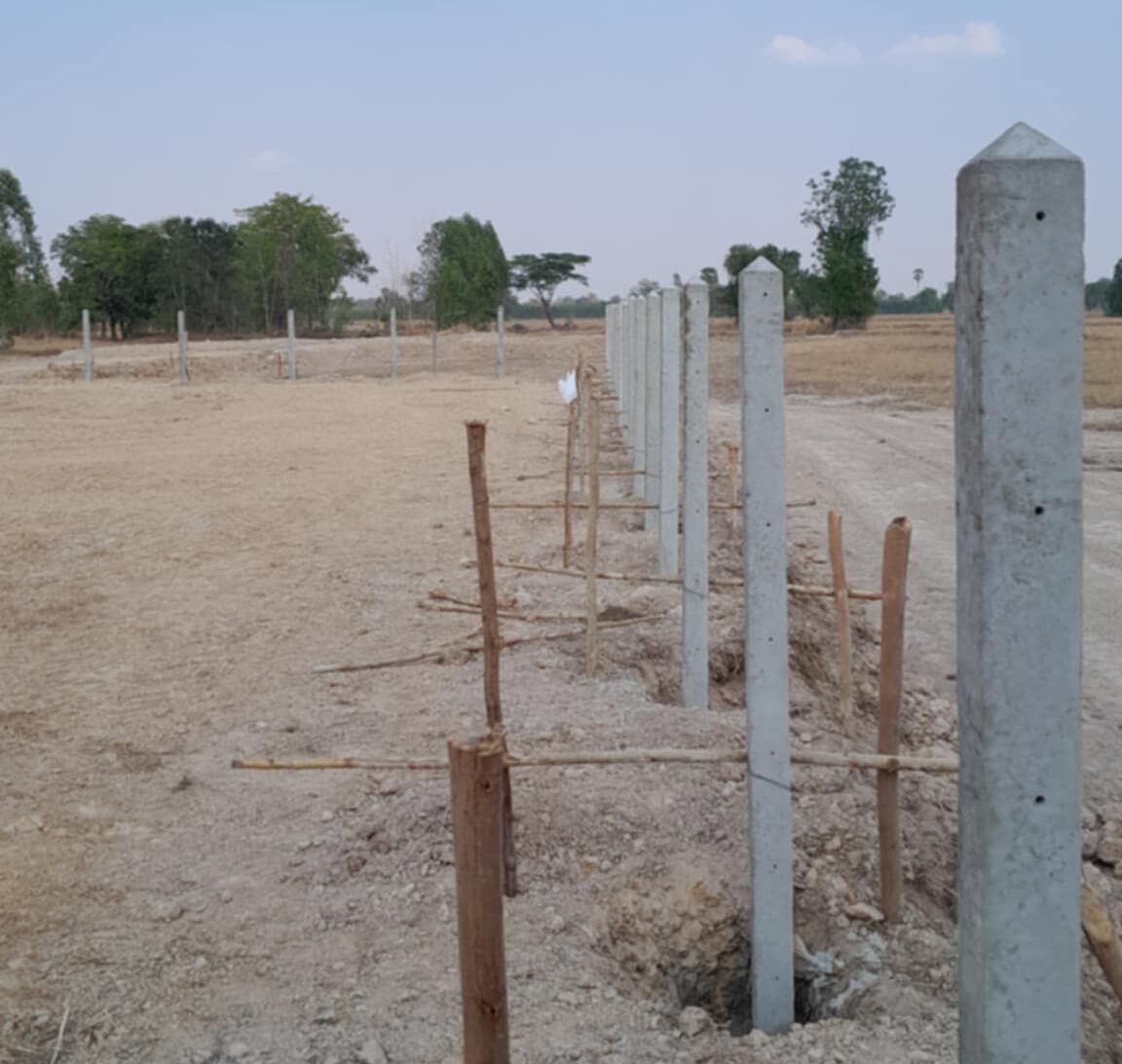
A significant proportion of foreigners living in Thailand hold land through their Thai spouse or partner. The land is registered in the Thai national’s name; the foreign national lives on or uses it by arrangement.
Thai law acknowledges this reality — but places constraints on it. When a Thai national purchases land using funds provided by their foreign spouse, the foreign spouse is required to sign a statutory declaration at the Land Office confirming that the money is the Thai spouse’s own personal property and not marital assets. The intent of this requirement is to prevent foreigners from indirectly holding land through marriage.
The practical implication is significant: once that declaration is signed, the foreign spouse has formally acknowledged that the land belongs to the Thai spouse alone. In the event of divorce or the death of the Thai spouse without a clear will, the foreign partner’s legal position over that land can be very difficult.
This arrangement is extremely common and works well in stable relationships. But it should be entered with clear legal advice, a well-drafted will on the Thai spouse’s side, and ideally supplemented with a registered usufruct or long-term lease in the foreign spouse’s name over the same land.
The Thai Company Route
You will encounter this route mentioned online. The claim is that a Thai limited company can own land, and a foreigner can hold up to 49% of that company — therefore a foreigner can indirectly control land through a company structure.
Thai authorities reject this as a legitimate route for personal land holding, and have done so with increasing firmness. The problem is the nominee shareholder arrangement: Thai nationals who nominally hold the majority shares but whose investment is funded and controlled by the foreign national. This is explicitly illegal under Thai law, and enforcement has been serious. Foreigners have had land seized under these arrangements.
A genuine Thai company — with genuine Thai shareholders making real independent investments, structured for a legitimate commercial purpose — can legally own land. But that is a fundamentally different situation from a company created primarily to allow a foreigner to hold residential or agricultural land in their own interest.
For almost everyone asking the question this article addresses, the company route is not available. Do not be tempted by anyone suggesting otherwise.
The One Exception: Condominium Ownership
Foreigners can own condominium units in Thailand outright, in their own name, with full title. This is the single clearest exception to the general prohibition on foreign land ownership.
The conditions: foreign nationals can collectively own up to 49% of the total unit area in any given condominium building. The purchase funds must demonstrably originate from overseas — this is documented via a Foreign Exchange Transaction Form (FETF) from a Thai bank.
This is relevant mainly in Bangkok, Pattaya, Chiang Mai and coastal resort areas. In Buriram, there is no meaningful condominium market.
Land in Buriram: What to Expect
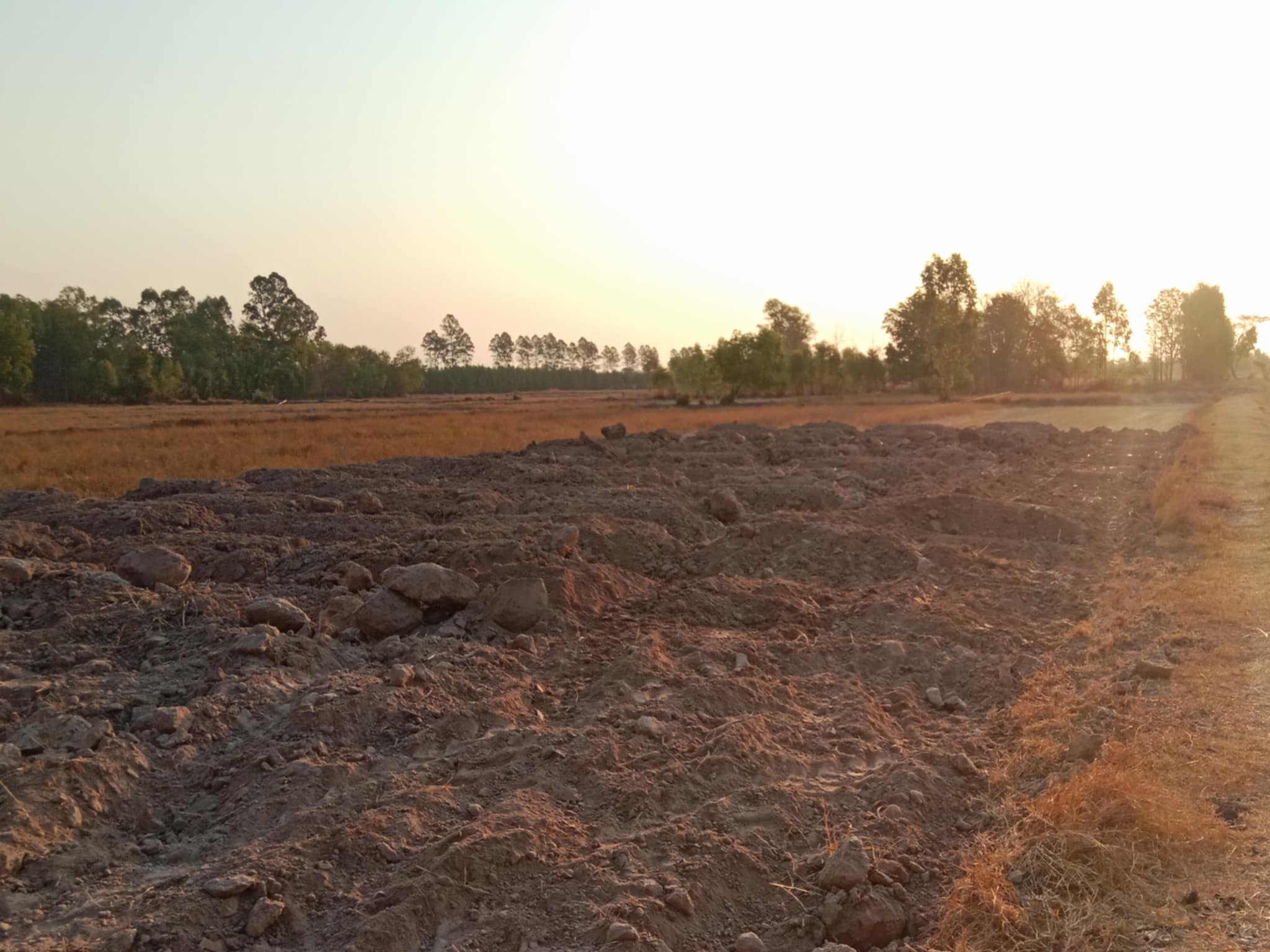
Buriram is a predominantly agricultural province — rice paddies, cassava fields, sugar cane, and the wide flat landscape of the Khorat Plateau that stretches across much of northeast Thailand. Large plots are the norm, prices have historically been low compared to coastal or tourist areas, and the land itself is productive rather than purely speculative.
That is changing. Land values in and around Buriram city have risen significantly in recent years, and the drivers are clear: the MotoGP Thailand Grand Prix at Chang Circuit brings tens of thousands of visitors annually and has put the province firmly on the international map, while Buriram United’s sustained dominance of Thai football has made the city a destination in its own right. Infrastructure has followed — roads, hotels, commercial development — and land prices near the city have responded accordingly.
Further out, particularly in the more remote districts and villages away from the main roads, the picture is different. Land remains genuinely affordable, the pace of price rises is slower, and the deals that represent real value are still there to be found. The key, in practice, is local knowledge. Plots with the best value rarely make it to formal listings — they circulate through family networks and local connections before any agent becomes involved. If you have a Thai partner or family connection with roots in the area, that network is worth far more than any property website.
For those without those connections, patience and local presence matter. A few visits, relationships built over time, and a willingness to look in areas that are not yet on anyone’s investment radar — that remains a viable approach in rural Buriram.
Finding the Right Lawyer
None of the above should be attempted without independent Thai legal advice. This means a lawyer who specialises in Thai property law — not a generalist, and not the seller’s lawyer, whose interests are not aligned with yours.
Costs for a straightforward lease or usufruct registration are typically modest — expect to pay for document preparation and Land Office registration fees. For more complex arrangements involving company structures, costs and timescales increase significantly.
The Law Society of Thailand and the Thai Bar Association can provide referrals. Many expat community networks in larger Thai cities maintain lists of English-speaking property lawyers with established reputations.
Transferring Money to Thailand
When you are ready to commit funds to a land transaction, how you transfer the money matters. Sending large sums via a traditional high-street bank typically means losing a significant percentage to poor exchange rates and transfer fees — on a transaction of £20,000 or more, that adds up.
Send money to Thailand with Wise — mid-market exchange rate, transparent fees, and the paper trail it creates — showing funds originating from overseas — is also useful documentation to have if the Land Office ever asks about the source of funds.
For managing finances remotely, whether from the UK or elsewhere, a VPN is worth having. Get Surfshark for Thailand — reliable, well-priced — reliable, well-priced, and useful beyond just banking.
Quick Reference: Options for Foreigners
| Route | Max duration | Registered? | Key risk |
|---|---|---|---|
| Long-term lease | 30 years | Yes — Land Office | Renewal not legally guaranteed |
| Usufruct | Lifetime or 30 years | Yes — Land Office | Ends at death, cannot be inherited |
| Superficies | 30 years (renewable) | Yes — Land Office | Less familiar to many lawyers |
| Thai spouse ownership | Indefinite | In spouse’s name | Divorce, death, or dispute |
| Thai company | — | — | Not a viable route for personal land holding; nominee shareholders are illegal |
| Condominium | Freehold | Yes — in your name | Buriram: no meaningful market |
A Final Note
Thai property law has nuance that this guide can outline but not fully resolve for your specific situation. Laws change, enforcement varies by region, and the Land Office officials you deal with in Buriram will have their own experience of how these instruments work locally. Get proper legal advice before committing to anything.
What this guide can tell you is that the picture is not as bleak as “foreigners cannot own land in Thailand” might suggest. With the right legal structure, registered correctly, it is possible to have meaningful and enforceable rights over Thai land for a very long time.
For travel insurance, World Nomads covers medical emergencies and travel disruption across Southeast Asia. For flexible monthly cover, SafetyWing Nomad Insurance is popular with longer-stay visitors across the region.
If you are planning a trip to explore land or property in Buriram, see our guides to getting to Buriram and where to stay in Buriram.
Buriram Live covers the real Buriram — temples, football, motorsport, rural life and practical information for visitors and those with deeper connections to the region. No fluff, no sponsored itineraries. Follow Buriram Live on Facebook for new articles and updates.
This article contains affiliate links. If you make a purchase through a link on this page, we may earn a small commission at no extra cost to you.
Get Buriram updates by email
Occasional emails when there is something worth knowing: new guides, festival and MotoGP dates, and Buriram United news. No spam, and you can unsubscribe at any time.
We will email you a link to confirm. See our privacy policy.