
If you’re based in Buriram, Surin province is practically on your doorstep — roughly 50 kilometres to the east, less than an hour by road or train. But Surin province is far more than a day trip. It’s the heartland of Thailand’s elephant culture, home to some of the finest silk weaving in the country. Khmer ruins dot the landscape, rivalling anything in the region. Whether you’re passing through or spending two or three days, here’s what’s worth your time.
The Elephants: Where Surin Made Its Name
Surin’s most famous export is its relationship with elephants, and that story centres on Ban Ta Klang — the world’s largest elephant-raising village, home to the Kuy people who have maintained the ancient bond between handler and elephant for generations.
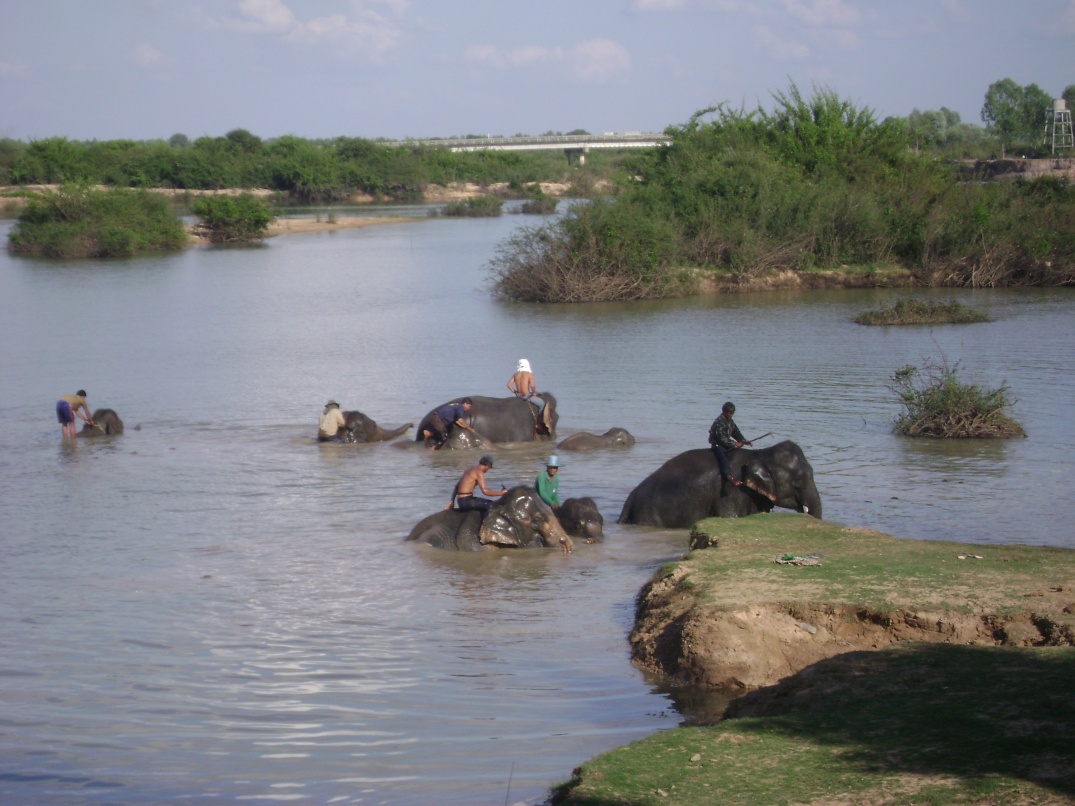
If you’re visiting Surin province, Ban Ta Klang is essential. You can watch river bathing, see elephant demonstrations and visit the elephant museum. The relationship between the Kuy community and their elephants is genuine and multigenerational — something that goes well beyond what you’ll find at purpose-built tourist camps.
The village also provides many of the elephants and mahouts who take part in the Surin Elephant Festival — held each November in Surin city itself. It’s one of the most spectacular events in the Thai calendar: hundreds of elephants, dawn processions, a scale you won’t find anywhere else.
Everything about the Surin Elephant Festival →
Ban Tha Sawang: The Silk Village That Dressed World Leaders
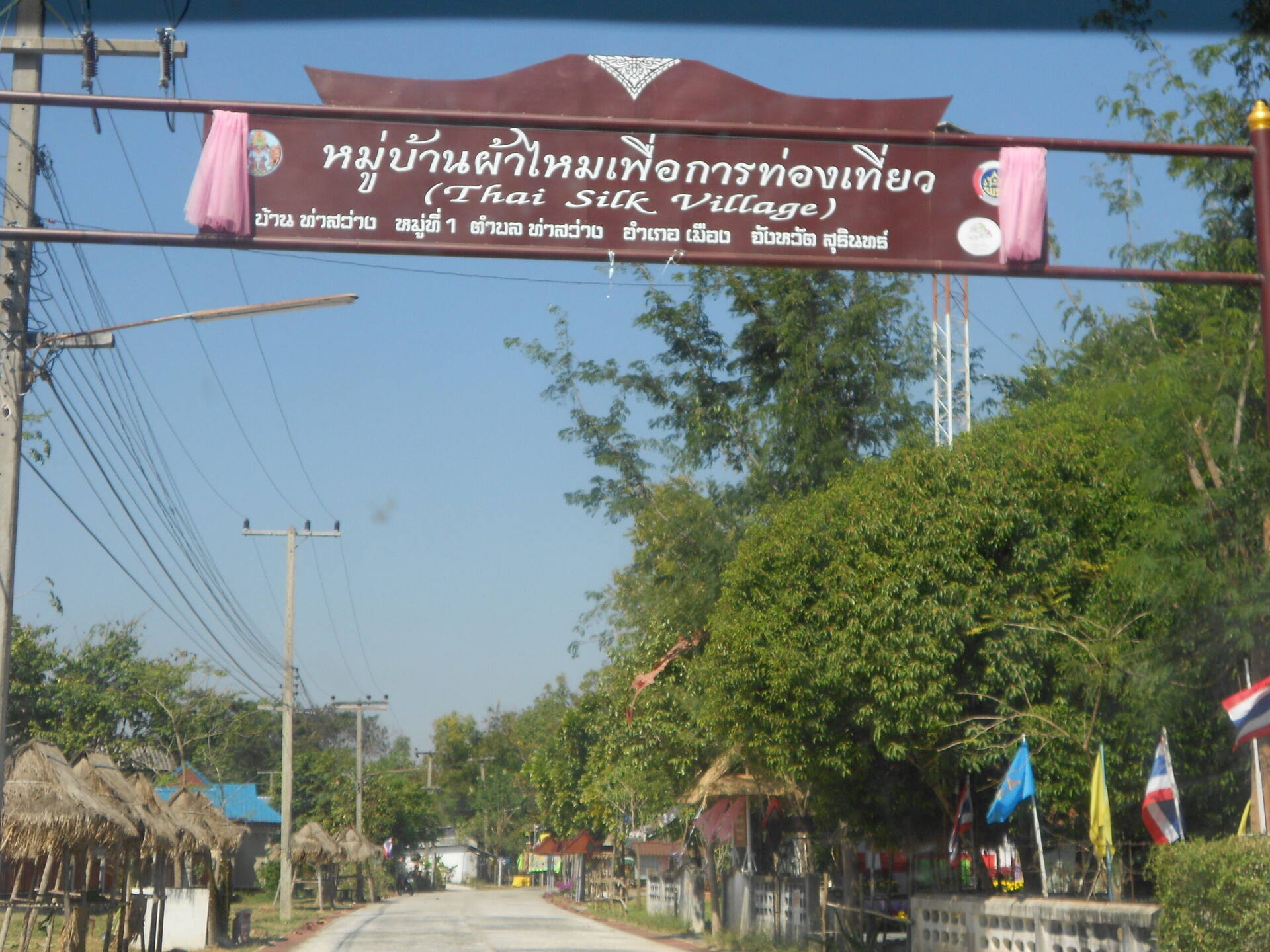
A few kilometres from Surin city, the village of Ban Tha Sawang doesn’t look like much from the road. A gateway arch, a quiet village street, rows of wooden workshops. But this is one of the most celebrated weaving villages in Thailand — and it has the credentials to prove it.
The APEC Commission
In 2003, Thailand hosted the APEC Economic Leaders’ Meeting in Bangkok. The Thai government chose Ban Tha Sawang to weave the ceremonial silk shirts and shawls for all 21 world leaders and their spouses. Master weaver Ajarn Weeratham led a team of 100 villagers to complete the commission. They presented the finished pieces — gold-brocaded, heavy with months of intricate work — to heads of state including George W. Bush, Vladimir Putin and Hu Jintao. The village has been known as the “APEC village” ever since.
The Workshops Today
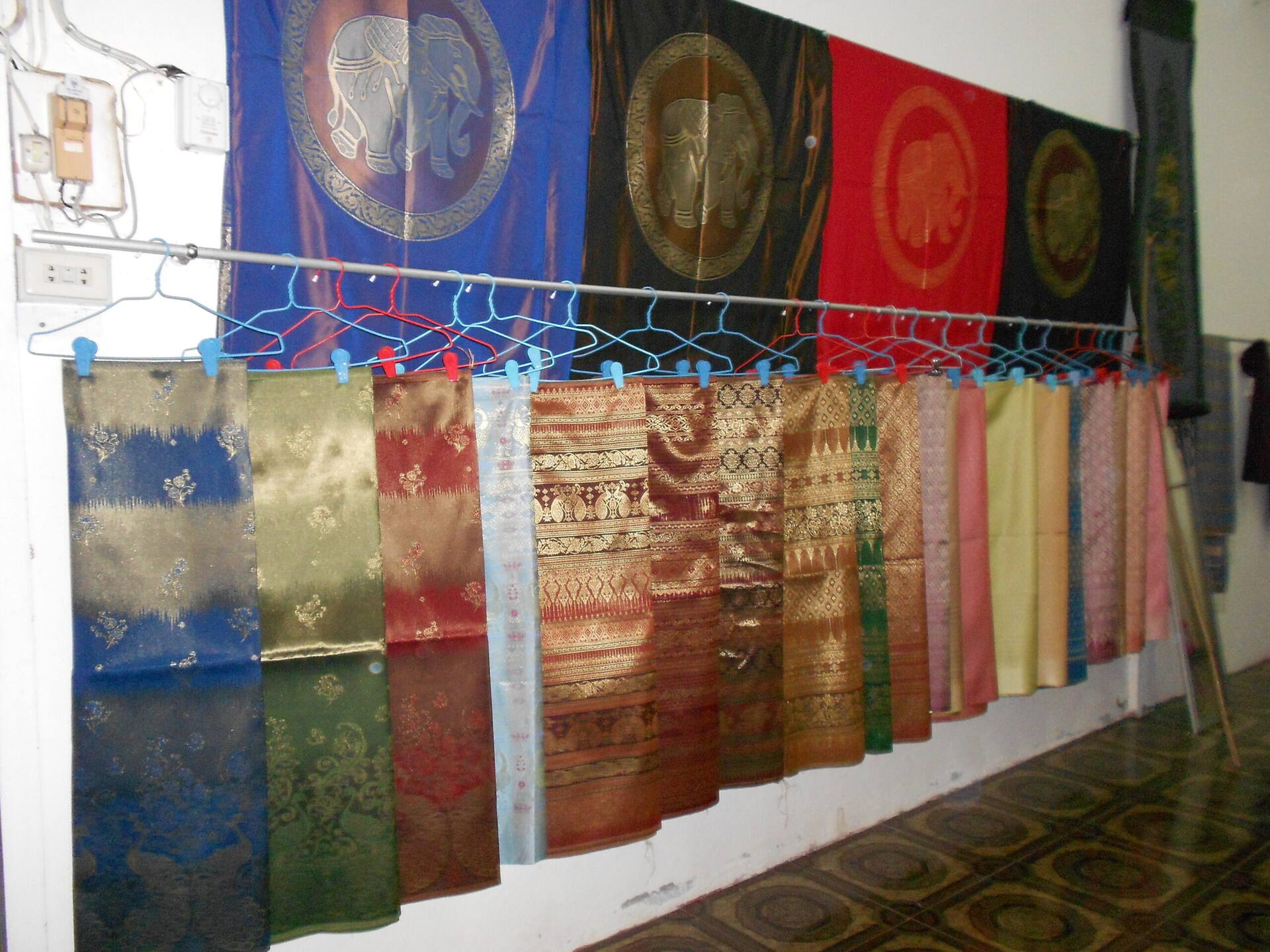
Walk through Ban Tha Sawang today and you’ll find weavers at traditional wooden looms used for generations — feet working the pedals, hands guiding silk threads into increasingly intricate patterns. The village specialises in gold-brocaded silk with elephant and peacock motifs. These textiles reach royal households and national museums. You can buy directly from workshops: lengths of fabric, scarves, traditional-style garments. Quality is exceptional and prices are far more reasonable than in Bangkok.
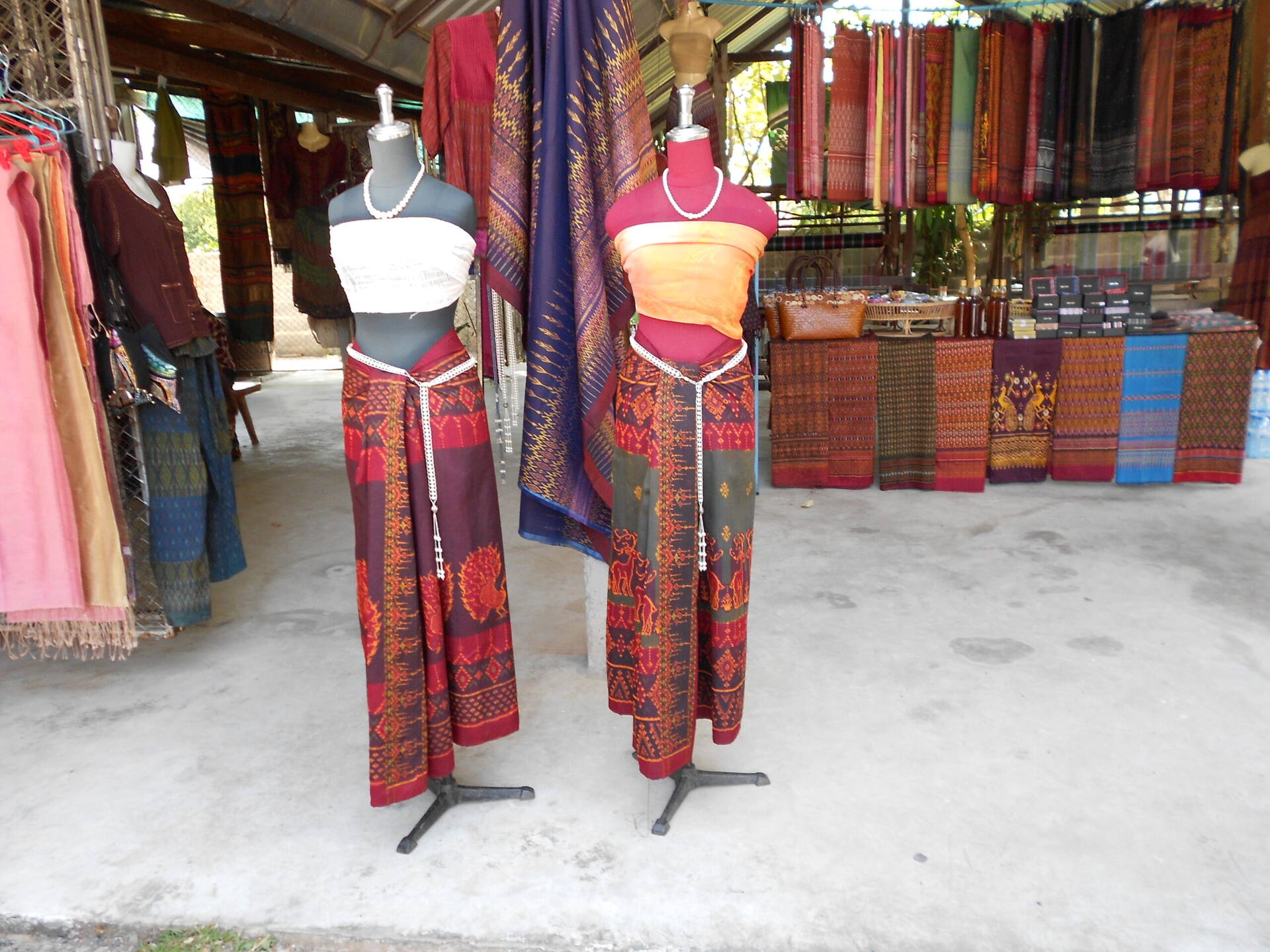
Ban Tha Sawang also supplies the Thai royal family and holds a 5-star National OTOP award — the highest recognition for a Thai community product. The village is well-signposted on the outskirts of Surin city in Mueang Surin district. Most workshops open during the day; visit in the morning when weavers are most active.
Prasat Sikhoraphum: The Khmer Temple in Your Path
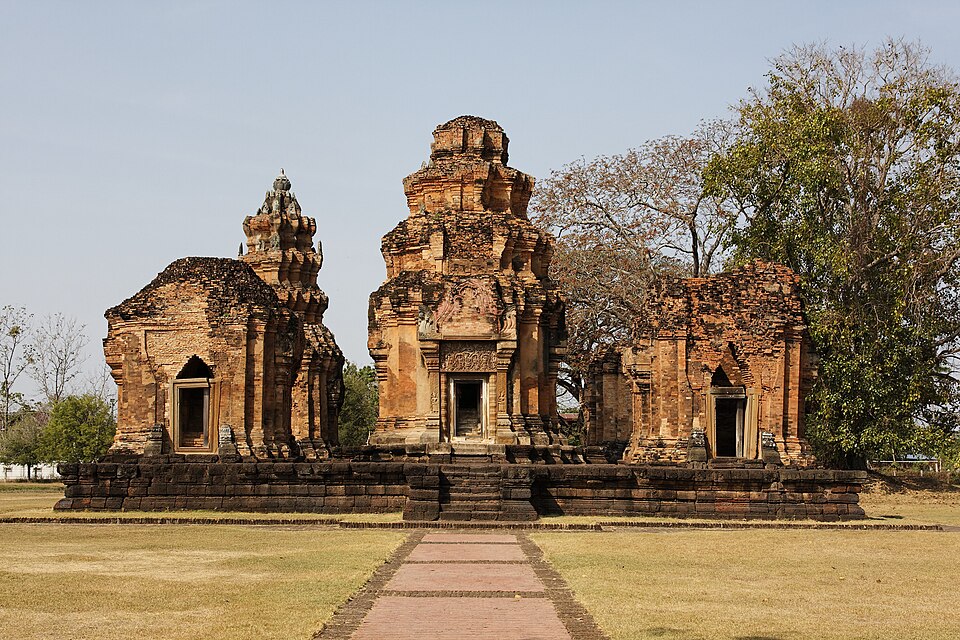

Roughly 40 kilometres east of Surin city — directly on the road between Surin and Sisaket — stands Prasat Sikhoraphum, one of the best-preserved Khmer temple complexes in northeast Thailand.
The 12th century saw King Suryavarman II — the same ruler who built Angkor Wat — construct this complex around five brick prangs in a quincunx pattern. A single tall central tower stands 32 metres high, surrounded by four smaller ones at each corner. It was a Hindu temple dedicated to Shiva; Buddhists converted it to their use in the 16th century.
The preserved stucco and sandstone carving sets Prasat Sikhoraphum apart — even from Buriram’s own Phanom Rung and Mueang Tam. Lintels show scenes from the Ramayana and Krishna’s exploits. The stucco depicts Shiva, Vishnu, Brahma and rows of devatas — fine jewellery, facial expressions, all still legible after nine centuries. Visitors enter through a single eastern gopura, sunrise-facing, as at every Khmer temple in the region.
If you’ve visited Phanom Rung or Mueang Tam, Prasat Sikhoraphum completes the picture of the Khmer presence across this corner of Thailand. Fewer visitors come here — which makes for a more contemplative experience. Entry fee: 50 baht.
Phanom Sawai Forest Park: Three Peaks and 1,080 Bells
Not far from Surin city, Phanom Sawai Forest Park rarely makes international travel guides but locals love it. The park spreads across three forested peaks, connected by walking trails and a wide cement staircase.
At the summit of the first peak stands a large white Buddha image — Phra Phuttha Surinthara Mongkhon — visible for kilometres in every direction. Along the staircase, 1,080 bells hang from posts and trees; visitors ring them as they climb, filling the hillside with sound. The higher peaks offer shrines and sweeping views across the Surin plain.
Locals release turtles into the ponds below as acts of merit-making; the animals live out their days in unhurried comfort. Visit in the early morning or late afternoon — the climb is short but the sun is fierce at midday.
Muang Mai Water Park: The Family Option
For a different kind of day out, Muang Mai in Lamduan district is Surin’s main water park — wave pools, multiple slides, dedicated areas for younger children, food and drink on site. Entry costs 100 baht for adults and 80 baht for children. The park rents swimwear on site if you don’t bring your own.
It fills up at weekends and during school holidays. Check the Muang Mai Facebook page before visiting for current opening times and seasonal closures.
Huai Saneng Reservoir: Quiet Water and Good Birds
On the edge of Surin city, Huai Saneng Reservoir rewards visitors who aren’t in a rush. Water lilies fringe the banks — photogenic in the morning light — and herons, kingfishers and open-country species gather around the margins. It’s a natural spot for a slow evening walk after a day at temples or markets. For birders, this pairs well with the wetland sites around Buriram — the species mix across both provinces is broadly similar.
Nong Tah Haeng: The Closer Lake
If a lake is what you’re after and Tung Kula feels too far north, Nong Tah Haeng sits right on the Buriram–Surin border. Floating rafts, hammocks over the water, food on the decks — a leisurely half-day that most visitors to the region miss entirely.
Full guide to Nong Tah Haeng →
Tung Kula: Surin Province’s Northern Lake
In the far north of Surin province, approaching the Roi Et border, the landscape opens into the vast Thung Kula Ronghai plain. Once an arid, salt-plagued plateau, it’s now the most celebrated jasmine rice growing region in Thailand. The Hom Mali rice here is the finest in the country; in harvest season the landscape is unlike anything else in the northeast.
Tung Kula Lake sits at the heart of the region — swimming, banana boat rides and moored rafts on the water, similar in feel to Nong Tah Haeng but with the open rice plain stretching out behind it. It makes a good half-day stop and pairs well with Ban Ta Klang. Both attractions sit in broadly the same direction from Surin city; driving north to combine them in a day is very manageable.
Food and the Night Bazaar
Surin city’s best evening option is the Night Bazaar on Krungsri Nai Road, running from around 5pm to 9:30pm. The road transforms into a pedestrian street of food carts, fresh produce stalls and small restaurants — locals eat here, not tourists.
Surin’s food culture overlaps with Buriram’s but has its own character. Look for pla ra-based dishes, naem (fermented pork sausage), grilled meats and som tam made with local Hom Mali rice. Surin Pochana near the city centre is well regarded for local specialities including frog with Thai basil and traditional Surin curry.
Where to Stay in Surin Province
Surin city has a decent range of guesthouses and mid-range hotels. Check availability early if you’re visiting during the Elephant Festival in November — the province fills up quickly and prices rise.
Check hotel availability in Surin →
Getting to Surin Province from Buriram
Surin city sits approximately 50 kilometres east of Buriram — under an hour by road or rail.
By train: The best option without a car. Both Buriram and Surin stations sit in their respective city centres, putting you within easy reach of guesthouses, restaurants and the Night Bazaar on arrival. Direct services on the Bangkok–Ubon Ratchathani line run several times a day; the journey takes 45–60 minutes. Book ahead during the Elephant Festival.
Search train times from Buriram to Surin →

By car or motorbike: Route 226 connects the two cities directly — flat, well-maintained, straightforward. A car gives you the most flexibility for Ban Ta Klang, Prasat Sikhoraphum and Phanom Sawai on your own schedule. A two-day circuit taking in Surin city, Ban Tha Sawang, Ban Ta Klang and Prasat Sikhoraphum is very achievable without rushing.
Compare car hire rates from Buriram Airport →
By bus: Regular services run from Buriram bus terminal to Surin in around an hour.
Practical Tips for Surin Province
- Best time to visit: November for the Elephant Festival — book months ahead. October–November also brings green landscapes and lower crowds after the wet season ends. March–May is hot and dry.
- Getting around: A car or motorbike suits the full circuit. Songthaews (shared pickup trucks) cover routes within Surin city.
- Language: Everyone in Surin city understands Central Thai. Many residents also speak Northern Khmer — the same language you’ll hear in villages along the Buriram–Surin border.
- Budget: Surin province is genuinely cheap by any standard. Entry fees, food and accommodation are all at the lower end of Thai prices.
Travel insurance that covers activities and medical treatment is worth having — particularly if you plan time at Ban Ta Klang or on the water at Tung Kula, where English-language services are thin on the ground.
Get a travel insurance quote for Thailand →
Prasat Sikhoraphum: Ddalbiez, CC BY-SA 3.0 via Wikimedia Commons. All other photographs own photos.
Buriram Live covers the real Buriram — temples, football, motorsport, rural life and practical information for visitors and those with deeper connections to the region. No fluff, no sponsored itineraries. Follow Buriram Live on Facebook for new articles and updates.
This article contains affiliate links. If you make a purchase through a link on this page, we may earn a small commission at no extra cost to you.
Get Buriram updates by email
Occasional emails when there is something worth knowing: new guides, festival and MotoGP dates, and Buriram United news. No spam, and you can unsubscribe at any time.
We will email you a link to confirm. See our privacy policy.